5G and Beyond (6G)

Available (32)

Showing 1 - 12 per page


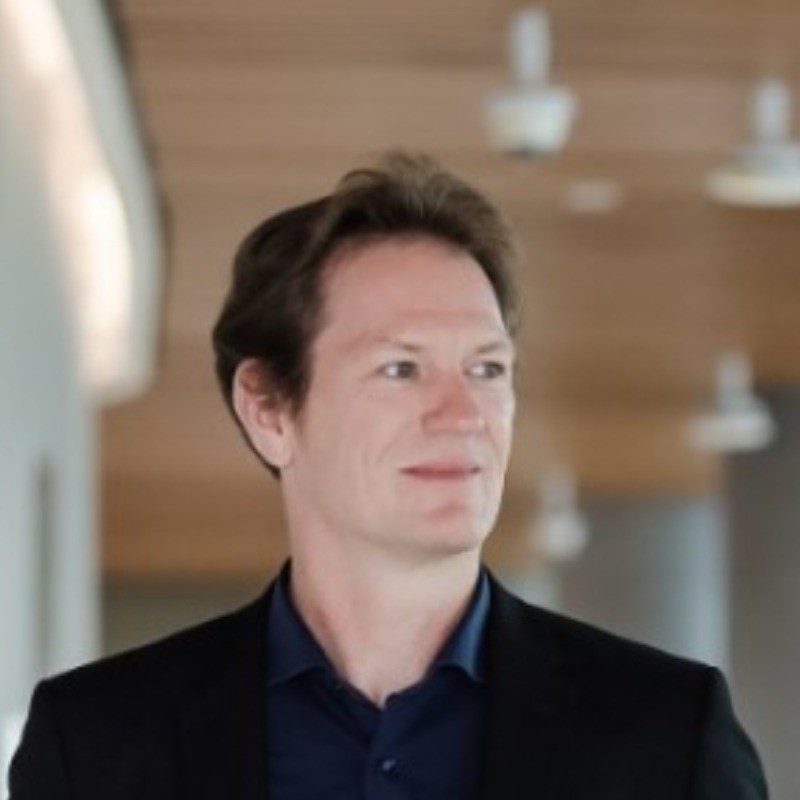
Sebastian Frey

Description of Activities

Standards development, policy engagement, and implementation evidence through a standards-neutral, technology-agnostic approach. The activities focus on advancing interoperability, trust, accountability and user control across future digital and 6G ecosystems while avoiding preference for specific technologies, platforms or providers.

Country
Germany
Fellow's country
Open Call
Organisation type
Organization
VIGERES GmbH
Portrait Picture
Frey
Role in SDO
Standards Development Organisation
Topic
5G and beyond
StandICT.eu Year
2029
Year

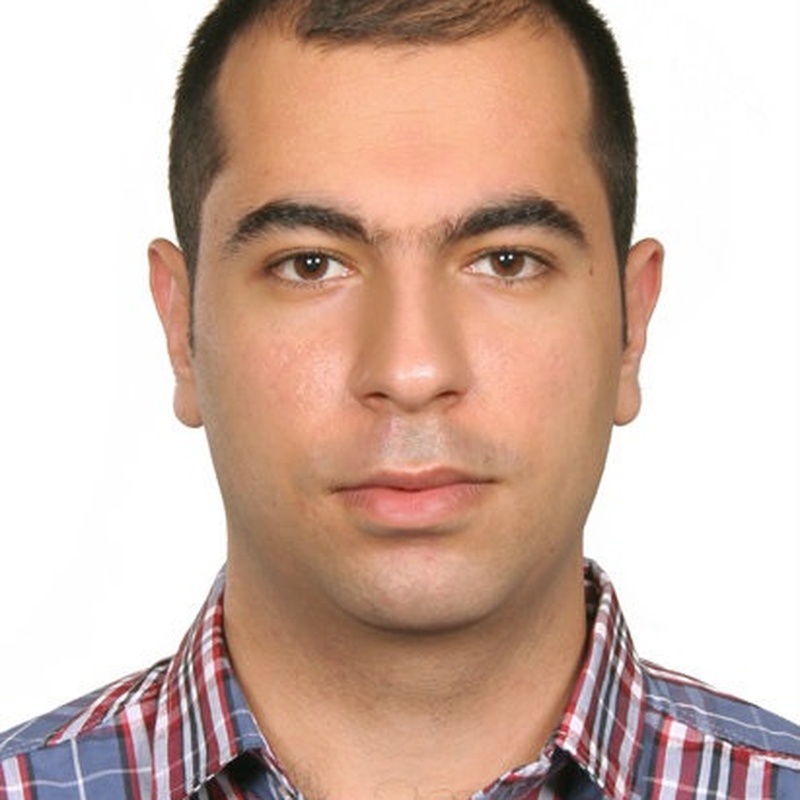
Dirk Kutscher

Description of Activities

Chair at the Internet Research Task Force (IRTF)

Country
Germany
Fellow's country
Open Call Topics
Open Call
Organisation type
Organization
University of Applied Sciences Emden/Leer
Portrait Picture
picture
Role in SDO
Standards Development Organisation
Topic
5G and beyond
StandICT.eu Year
2029
Year

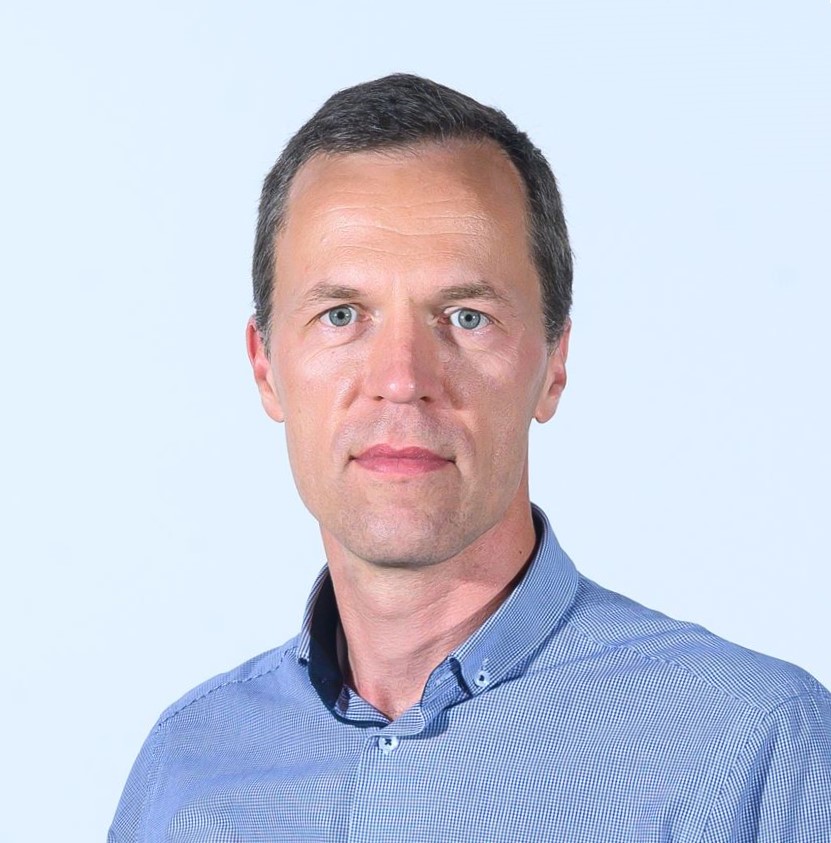
Per Andersson

Country
Sweden
Fellow's country
Open Call
Organisation type
Organization
Ionio Systems Sweden AB
Portrait Picture
picture
Role in SDO
Standards Development Organisation
StandICT.eu Year
2029
Year
Topic (2nd Open Call)

M.2177 : Detailed specifications of the satellite radio interfaces of International Mobile Telecommunications-2020 (IMT-2020)

ITU Recommendation M.2177: Detailed specifications of the satellite radio interfaces of International Mobile Telecommunications-2020 (IMT-2020)  approved in 02-2026 and managed by ITU SG4 Satellite services

M.2150 : Detailed specifications of the terrestrial radio interfaces of International Mobile Telecommunications-2020 (IMT-2020)

ITU Standard: M.2150 : Detailed specifications of the terrestrial radio interfaces of International Mobile Telecommunications-2020 (IMT-2020)  

 ITU-R Recommendations on the IMT family: approved in 2026-02

Managed by ITU SG5  ​​​​​​​​​​​​​​​​​​​​​​​​​​​​​​​​​​​​​​​​​​​​​​​​​​​​​​​​​​​​​​​​​​​​​​​​​​​​​​​​​​​​Terrestrial services Systems and networks for fixed, mobile, radiodetermination, amateur and amateur-satellite services.

IEEE/IEC P63195-4 Assessment of Power Density of Human Exposure to Radio Frequency Fields Part 4

IEEE/IEC Draft International Standard - Assessment of Power Density of Human Exposure to Radio Frequency Fields from Wireless Devices in Close Proximity to the Head and Body (Frequency Range of 6 GHz to 300 GHz) Part 4: Computational Procedures for Absorbed Power Density

This document specifies computational procedures for conservative and reproducible computations of the absorbed power density (APD) or epithelial power density, which is a measure to quantify the dissipated electromagnetic power in the human head or body due to exposure to radiofrequency (RF) electromagnetic field (EMF) transmitting devices. The computational procedures described are finite-difference time-domain (FDTD) and finite element methods (FEM), which are used to determine electromagnetic quantities by solving Maxwell's equations. The procedures specified here apply to exposure evaluations for the significant majority of the population during the use of hand-held and body-worn RF transmitting devices with known uncertainty. The methods apply to devices with single or multiple transmitters or antennas that operate with their radiating structure(s) at distances up to 200 mm from the human head or body. This document can be employed to evaluate compliance with applicable APD limits of different types of RF transmitting wireless communication devices used in close proximity to the head and body, with or without RF transmitting or non-transmitting accessories, or of devices embedded in garments. The overall applicable frequency range of the specified protocols and procedures is from 6 GHz to 300 GHz. The categories of wireless communication devices covered in this document include mobile telephones, radio transmitters in personal computers, desktop and laptop devices, and multi-band and multi-antenna devices. The procedures of this document do not apply to APD evaluation of electromagnetic fields emitted or altered by devices or objects intended to be implanted in the body.

IEEE/IEC P63195-3 Assessment of Power Density of Human Exposure to Radio Frequency

IEEE/IEC Draft International Standard - Assessment of Power Density of Human Exposure to Radio Frequency Fields from Wireless Devices in Close Proximity to the Head and Body (Frequency Range of 6 GHz to 300 GHz) Part 3: Measurement Procedures for Absorbed Power Density

This document specifies protocols and test procedures for repeatable and reproducible measurements of the absorbed power density (APD) that provide conservative estimates of the exposure of the human head or body to radio-frequency (RF) electromagnetic fields (EMF) emitted by wireless communication devices, with a specified measurement uncertainty. These protocols and procedures apply to the evaluation of the exposure of the significant majority of the population during the use of hand-held and body-worn RF transmitting wireless communication devices. The methods apply to devices, with single or multiple transmitters or antennas, that operate with their radiating structure(s) at distances up to 200 mm from the human head or body. The methods of this document can be used to evaluate compliance with applicable APD limits of different types of RF transmitting wireless communication devices used in close proximity to the head and body, with or without RF transmitting or non-transmitting accessories, or of devices embedded in garments. The overall applicable frequency range of the specified protocols and procedures is from 6 GHz to 300 GHz. The categories of wireless communication devices covered in this document include mobile telephones, radio transmitters in personal computers, desktop and laptop devices, and multi-band and multi-antenna devices. The procedures of this document do not apply to APD evaluation of electromagnetic fields emitted or altered by devices or objects intended to be implanted in the body.

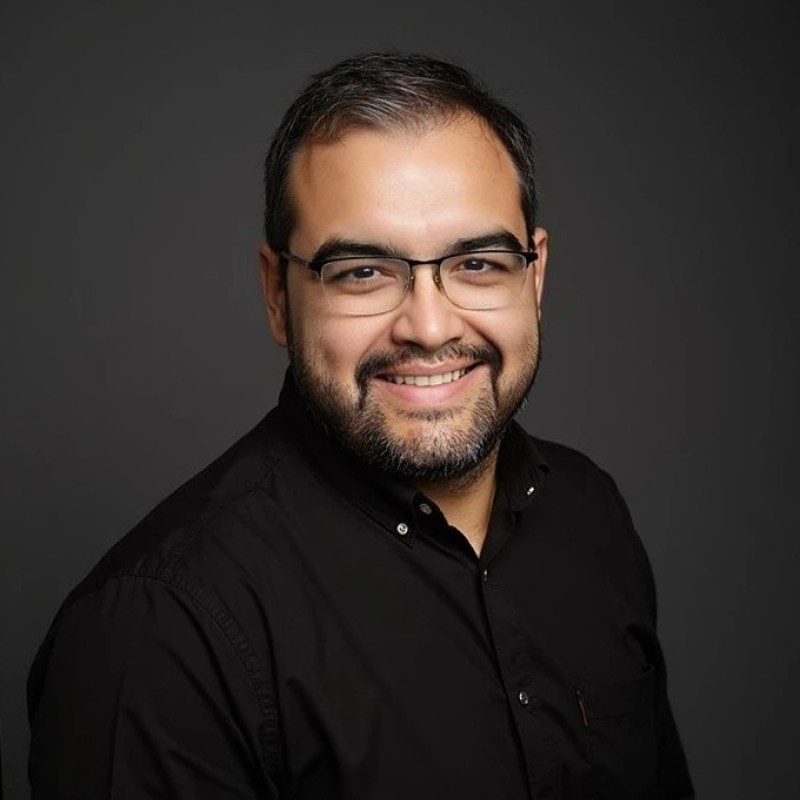
Antonio Jara

Description of Activities

The sectors of Digital Twins, Virtual Worlds/Citiverse, IoT and Data Spaces are fragmented, especially the uneven uptake of NGSI‑LD, Smart Data Models/SAREF and governance models creates a barrier for cross‑domain interoperability in cities. Therefore, I focus on harmonising these layers within ITU‑T Citiverse and EU Local Digital Twin  (LDT) Toolbox. I also contribute to aligning LDT and Data Space governance with UNE 0087:2025 and the Gaia‑X Trust Framework to operationalise sovereignty, compliance and automated conformance. Moreover, I contribute to mapping LDT/MIM8, NGSI‑LD, SIMPL and Citiverse deliverables to speed deployment and avoid duplicate or conflicting specs. 
 

Country
Spain
Fellow's country
Impact on SMEs (9th Open Call)
Libelium is a SME and it has directly contribute to Libelium and other SMEs working on Data Spaces, Digital Twins and Citiverse by lowering entry costs via reusable NGSI‑LD/MIM8 profiles and Toolbox components; reduced lock‑in and faster integrations, and making easier the market access to Data Space Ready patterns (CT73/UNE) and Gaia‑X alignment for trustworthy exchange.
Impact on society (9th Open Call)
I see a bit different societal impact of each target project:
Interoperable public services and vendor‑neutral procurement via NGSI‑LD/MIM8 profiles.
Trustworthy data sharing for cities/SMEs through UNE 0087 an Gaia‑X trust mechanisms.
Inclusive urban innovation under the Citiverse initiative (human‑centred, open, safe).

Open Call
Organisation type
Organization
Libelium
Portrait Picture
Antonio Jara
Proposal Title (9th Open Call)
Integrating Citiverse and Local Digital Twins via Data Spaces
Role in SDO
Standards Development Organisation
StandICT.eu Year
2026
2029
Year
Topic (9th Open Call)

Paul Harvey

Description of Activities

In my fellowship i have been working to support the challenge of native integration of AI in the context of communication networks. While much success has been achieved in addressing network use cases with intelligent technologies, this has predominantly been applied in a case by case basis, with resulting outputs added to the networks in an ad-hoc way. Instead, AI-native networks are envisioned to accommodate the ubiquitous and native deployment of AI-based solutions in the network.
Through the work of the ITU-T Focus Group on AI-Native Networks, I contributed to the elaboration of use case, and associated requirements. I have also been supporting on the analysis of relevant key technologies that are required to realise the requirements derived from the use cases. 
 

Country
United Kingdom of Great Britain and Northern Ireland (the)
Impact on SMEs (9th Open Call)
AI-native networks are set to increase the amount of automated operation within our networks, making them more scalable and resilient and decreasing OPEX. From a consumer perspective, this will translate to more reliable service operation at a lower cost.
Impact on society (9th Open Call)
Integration of AI in the management and operation of telecommunication networks, supports increased automation, reducing the operational expenditure and increasing the reliability of their operation. Together, this supports cheaper, more resilient, and high quality critical national infrastructure for society that relies on such networks for entertainment, maintain societal bonds, education, emergency support, and commerce. In this way, this work in-directly supports this by supporting standardisation that eases the integration of AI in networks.
Open Call
Organisation type
Organization
University of Glasgow
Portrait Picture
Paul Harvey
Proposal Title (9th Open Call)
AI-Native for Autonomous 5G and 6G Networks
Role in SDO
Standards Development Organisation
StandICT.eu Year
2026
Topic (9th Open Call)

Mathy Vanhoef

Description of Activities

This fellowship supported my work in updating to the IEEE 802.11 standard to prevent a recently discovered security weakness. This weakness is related to mesh networks, where, without extra defenses, an adversary could inject arbitrary packets into protected mesh networks. We designed a defense to mitigate this challenging gap. Unique about our created defense is that it is fully backward compatible, meaning each individual mesh client can independently enable this defense. As a proof-of-concept, we also implemented this defense in the Linux kernel to demonstrate practicality and confirm it prevents attacks.
 

Country
Belgium
Fellow's country
Impact on SMEs (9th Open Call)
During the fellowship, I have been in contact with LANCOM, a European company providing Wi-Fi equipment, on improving the security of their devices, inspired by our research and contributions to the IEEE 802.11 standards. This allows European SMEs to take a leadership position on ensuring security and privacy in IEEE 802.11 equipment and networks.
Impact on society (9th Open Call)
Privacy and security are core human rights in our eyes, and our standardization improvements support this societal right. More broadly, these contributions help us as a European player to influence the IEEE 802.11 standard with these values. The security improvements are also created with sustainability in mind, as their overhead is designed to be minimal and practically negligible, and is designed to be backward compatible to reduce e-waste.

Open Call
Organisation type
Organization
Universiteit Leuven
Portrait Picture
Mathy Vanhoef
Proposal Title (9th Open Call)
Security and Privacy Enhancements for IEEE 802.11
Standards Development Organisation
Topic
Cybersecurity
StandICT.eu Year
2026
2029
Year
Topic (9th Open Call)