2026

Available (3)

Showing 1 - 3 per page


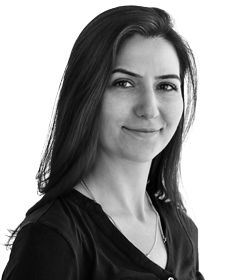
Paul Lesbre

Description of Activities

Co-founder of a circular economy startup developing infrastructure for DPP-enabled resale in the European textile sector, based in Berlin. Leading business development, regulatory strategy, and product design for a platform that enables verified resale through Digital Product Passports. The startup is incubated at ESCP Blue Factory.

French national with experience in business development and technology. Self-taught technical skills in product prototyping and data systems. Previous experience includes roles in consulting and business analysis.

Beyond this project: Active in the European circular economy ecosystem. Relocating to Paris in May 2026 to continue building at the intersection of sustainability regulation and commerce technology.


Country
France
Fellow's country
Open Call
Organisation type
Organization
Realign
Portrait Picture
Paul
Standards Development Organisation
StandICT.eu Year
2029
Year

Daniel Waszkiewicz

Description of Activities

My work aims to develop robust frameworks for the verification of cryptographic protocols within the security of ICT products, services, and processes, thereby enhancing resilience against cyber threats.

Fellow's country
Impact on SMEs (4th Open Call)
Ensuring that protocols are rigorously verified according to standardised methodologies could, at least partly, lower the financial barriers for SMEs to enter the certification market, as the consistent and reliable verification of protocols would streamline the certification of more complex systems.
Impact on SMEs (5th Open Call)
By implementing rigorous, standardized verification methods, the overall efficiency of the certification process would improve. This would, to some extent, lower financial entry barriers for SMEs in the certification market, as consistent and dependable protocol verification would simplify the certification of more intricate systems.
Impact on SMEs (6th Open Call)
A unified approach to the verification of cryptographic protocols within cybersecurity certification schemes could significantly reduce the costs and workload associated with certifying composite products or services. By ensuring that protocols are rigorously verified using standardized methodologies, the overall efficiency of the certification process would improve. This could, at least in part, lower the financial barriers for SMEs to enter the certification market, as consistent and reliable verification of protocols would streamline the certification of more complex systems.
Impact on SMEs (7th Open Call)
A unified approach to the verification of cryptographic protocols within cybersecurity certification schemes could significantly reduce the costs and workload associated with certifying composite products or services. By ensuring that protocols are rigorously verified using standardized methodologies, the overall efficiency of the certification process would improve. This could, at least in part, lower the financial barriers for SMEs to enter the certification market, as consistent and reliable verification of protocols would streamline the certification of more complex systems.
Impact on society (4th Open Call)
My work is centred on creating robust frameworks for verifying cryptographic protocols within ICT products, services, and processes, ultimately strengthening resilience against cyber threats.
Impact on society (5th Open Call)
In the broader European context, my fellowship is poised to have a significant impact on cybersecurity practices, aligning with the objectives set forth by the Cybersecurity Act (CSA) and advancing European interests in bolstering digital security.
Impact on society (6th Open Call)
My primary focus is on developing standardized verification methodologies for cryptographic protocols, which play a key role in enhancing cybersecurity practices across Europe. I am working on creating robust frameworks for verifying these protocols within ICT products, services, and processes, ultimately contributing to greater resilience against cyber threats.
The Cybersecurity Act (CSA) promotes the use of certification as an effective cybersecurity tool that can be applied consistently across Member States without creating unnecessary administrative burdens. Previously, products or services certified in one country often had to undergo similar procedures again when different national requirements were in place.
With the introduction of the European Cybersecurity Certification (EUCC) scheme, however, certificates issued under this framework will be legally recognized across all Member States once the corresponding Implementing Act is in force. This harmonization is essential for reducing duplicated efforts, saving time and resources, and ensuring consistent cybersecurity standards throughout Europe.
Impact on society (7th Open Call)
My primary focus is on developing standardized verification methodologies for cryptographic protocols, which play a key role in enhancing cybersecurity practices across Europe. I am working on creating robust frameworks for verifying these protocols within ICT products, services, and processes, ultimately contributing to greater resilience against cyber threats.
The Cybersecurity Act (CSA) promotes the use of certification as an effective cybersecurity tool that can be applied consistently across Member States without creating unnecessary administrative burdens. Previously, products or services certified in one country often had to undergo similar procedures again when different national requirements were in place.
With the introduction of the European Cybersecurity Certification (EUCC) scheme, however, certificates issued under this framework will be legally recognized across all Member States once the corresponding Implementing Act is in force. This harmonization is essential for reducing duplicated efforts, saving time and resources, and ensuring consistent cybersecurity standards throughout Europe.
Organisation type
Organization
Cryptography specialist, National Institute of Telecommunications
Portrait Picture
wasz
Proposal Title (4th Open Call)
Developing ISO/IEC 29128 parts 2 and 3
Proposal Title (5th Open Call)
Progressing ISO/IEC 29128 parts 2 and 3
Proposal Title (6th Open Call)
Advancing ISO/IEC 29128 parts 2 and 3
Proposal Title (7th Open Call)
Advancing ISO/IEC 29128 parts 2 and 3
Standards Development Organisation
StandICT.eu Year
2026
2029
Year

Amelie Gyrard

Description of Activities

The objective of this fellowship is to include European contributions on viable methodologies on semantic interoperability in ISO standards: ISO SC41 IoT and Digital Twin, with a focus on practical use cases in the domains of health/well-being.

Fellow's country
Impact on SMEs (4th Open Call)
Trialog is a SME so we are directly impacted by my contribution. Trialog was the coordinator of the ACCRA H2020 project (robots for ageing), which is now finished. We follow up with standard activities on robotics. In addition, the standards under consideration will benefit all the Smart Robotics and Internet of Robotic Things ecosystem, including SMEs. SME can develop tools and applications compliant with those standards.
Impact on SMEs (5th Open Call)
Trialog is a SME so we are directly impacted by my contribution. Trialog was the coordinator of the ACCRA H2020 project (robots for ageing) which is now finished. We follow up with standard activities on robotics. In addition, the standards under consideration will benefit all the Smart Robotics and Internet of Robotic Things ecosystem, including SMEs. SME can develop tools, applications compliant with those standards.
Impact on SMEs (7th Open Call)
Trialog is a SME so we are directly impacted by my contribution. In addition, the standards under consideration will benefit all the Smart Health and IoT ecosystem, including SMEs. SME can develop tools, applications compliant with those standards.
Impact on society (4th Open Call)
Accelerating the use of digital twins, as the existence of the semantic repository allows the digital twin to manage semantics while the physical twin is managing data. This methodology will ensure a consistent continuum between the physical twin and the digital twin.
Impact on society (6th Open Call)
The following impacts are identified at a general level:
The Internet of Things (IoT) addresses many societal challenges including climate change, resource and energy efficiency and ageing.
In the emerging IoT economy, voluntary global standards can accelerate adoption, drive competition, and enable cost-effective introduction of new technologies.
Standardisation facilitates the interoperability, compatibility, reliability, security and efficiency of operations on a global scale among different technical solutions, stimulating industry innovation and providing greater clarity to technology evolution.
Interoperability between IoT networks operated by different companies along the value chain opens up opportunities to address EU Policy objectives, e.g. greater resource efficiency for a more circular economy, sustainable and responsible supply chains through transparency and traceability, and others
Impact on society (7th Open Call)
The number of connected devices is expected to exceed 20 billion by 2020. This market will be fostered by proper interoperability standards. Europe is strong in IoT innovation and has made significant technical contributions (AIOTI) including in some specific standardization contexts. AIOTI now has a recognized presence at the ISO level, and it is now key to concretize this presence so that European innovation is well represented.
Organisation type
Organization
Principal Research & Innovation Consultant, Trialog
Portrait Picture
Gerard
Proposal Title (3rd Open Call)
IoT Semantic Interoperability for stress management, good health and well-being
Proposal Title (4th Open Call)
IoT Semantic Interoperability for Internet of Robotic Things
Proposal Title (5th Open Call)
IoT Semantic Interoperability for Active Assisted Living with robots for enhanced well-being
Proposal Title (6th Open Call)
Contribution to the standardization of IoT Interoperability by ensuring integration of SAREF
Proposal Title (7th Open Call)
IoT Semantic Interoperability for health informatics and well-being
Standards Development Organisation
StandICT.eu Year
2026
Year
Topic (3rd Open Call)
Topic (4th Open Call)
Topic (5th Open Call)
Topic (6th Open Call)
Topic (7th Open Call)