Web 4.0 and virtual worlds

Available (352)

Showing 349 - 352 per page


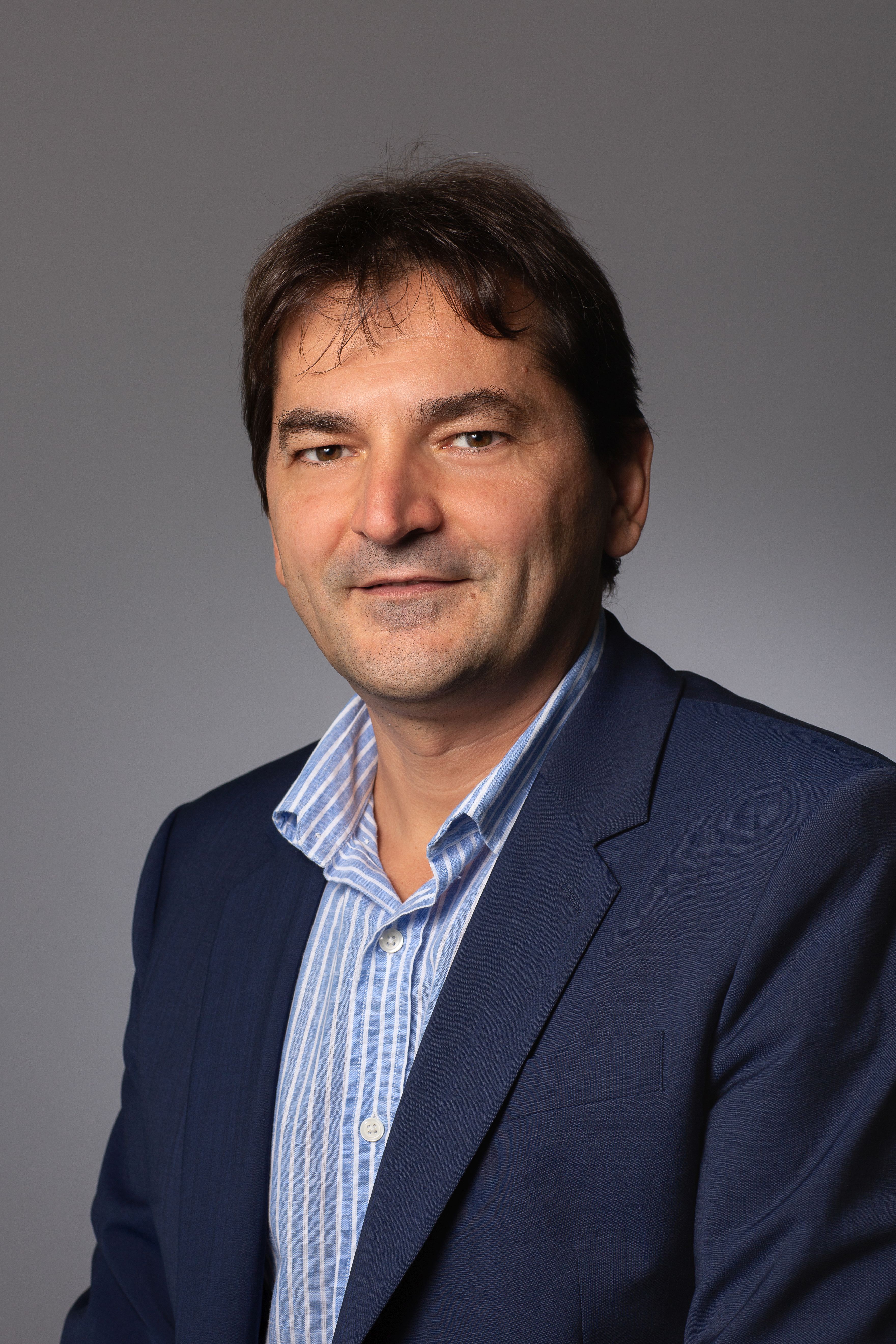
Torbjörn Lahrin

Description of Activities

Local Digital Twins will be a fundamental building block for CitiVerse. It will also play a crucial role for anyone in the public sector who wants to fully utilize the usage of AI.
Today, cities, regions and countries all over the world are building Local Digital Twins using various tools and approaches. Game engines, CAD tools, GIS, AR/VR/XR tools, Urban Digital Platforms, CIM and other visualisation tools are used. Thus a wide spread of technologies and standards. 
Interoperability for Local Digital Twins (LTD) is crucial. They need to fit horizontally and vertically. Horizontally is to put a LDT of one city next to a LDT of another city and make them align. Vertically, by example, a LDT produced by a city must fit LDT from public transportation and LDT by the energy company for the same geographical area, etc. 

European CitiVerse will be built upon Local Digital Twins. If separate Local Digital Twins in Europe don't fit together it will be impossible to create a seamless CitiVerse. It will also be difficult with interoperability between LDT:s. The LDT also needs interoperability versus dataspaces and IoT. For a LDT:s to be useful for officials and others, LDT:s need interoperability with the business operating systems used by officials on a daily basis. 

In this sense, in the framework of my fellowship, my JWG has sent a survey to many major LDT projects around the world, and we are now gathering the results and statistics.  The result will be a gap analysis and a technical report, which will enable advice to all relevant major SDO:s on how to develop or change their standards to fit better together. 

Fellow's country
Open Call Topics
Impact on SMEs (7th Open Call)
Investing in Local Digital Twins and CitiVerse is today rather challenging. All technologies for creating LDT:s or CitiVerse have their strengths and weaknesses. Any investment made today is therefore associated with a rather high degradation of uncertainty. Still, the SME:s and Europe must invest already now in these technologies to have a chance to be “on the train” and ahead in the competition. However, this also comes with a large risk that European SME:s and, in the broader scope, the European societies to some extent might find themselves investing in the “wrong” direction with techniques and methods that will not be long lasting.
To know what other actors are doing all around the world will help stakeholders to navigate and to invest in “right” directions with long term safer investments. Once we get an international reference architecture for LDT:s in place this will give even more security for those parties following the international standard.
Impact on SMEs (9th Open Call)
Investing in Metaverse and CitiVerse is today rather challenging. All technologies for creating Metaverse, CitiVerse and underlaying Local Digital Twins have strengths and weaknesses. Such investments are therefore associated with a rather high degrade of uncertainty. Still, the SME:s and European societies must invest already now in these technologies to have a chance to be “on the train” and ahead in the competition. Also for implementing various parts of CitiVerse related to EU calls. However, this come with a large risk investing in the “wrong” direction with technique and methods that will not be long lasting.
Because of this European SMEs and societies will benefit from the creation and coordination of standards for Metaverse. They will also benefit from gaining knowledge about the international standardization, as such knowledge will help SME:s and societies of Europe to navigate and to invest in “right” directions with long term safer investments.
Impact on society (9th Open Call)
The work is laying the foundation for uniting the world in how to build Local Digital Twins (Urban Digital Twins and City Information Modelling) and how to make these interoperable with each other both horizontal, vertical and towards underlaying data sets and daily operation systems of cities and other authorities. It is also paving the road for how Local Digital Twins can be used as the foundation for building CitiVerse.
Open Call
Organization
Lahrin i Hajstorp AB
Portrait Picture
picture
Proposal Title (7th Open Call)
GAP Analysis, Reference Architecture and Ontology for Local Digital Twins
Proposal Title (9th Open Call)
JTC1 CG2 - Strategic Coordination Group on Metaverse
Gap analysis, reference architecture and ontology for local digital twins
Role in SDO
Standards Development Organisation
StandICT.eu Year
2026
Year
Topic (7th Open Call)
Topic (9th Open Call)

Torbjörn Lahrin

Description of Activities

The result of my current fellowship is a gap analysis and technical report including advice to all relevant major SDOs on how to develop or change their standards to fit better together. The JWG will also lay the foundation for producing an international reference architecture for LDT:s aligned with the international reference architectures for Digital Twins, IoT and Smart Cities among others.

Fellow's country
Open Call Topics
Open Call
Organisation type
Organization
Co-convenor representing JTC1, Lahrin i Hajstorp AB
Portrait Picture
lahrin
Proposal Title (3rd Open Call)
JWG between ISO/IEC JTC1 and IEC/SyC Smart Cities on Local Digital Twins
Standards Development Organisation
StandICT.eu Year
2026
Year
Topic (3rd Open Call)

Pilar Orero

Description of Activities

The priority is to establish the human as the centre of the Metaverse, where the human has diverse capabilities.

Country
Spain
Fellow's country
Open Call Topics
Open Call
Organisation type
Organization
Researcher, Universitat Autònoma de Barcelona
Portrait Picture
Orero
Proposal Title (1st Open Call)
Accessibility in the Metaverse
Standards Development Organisation
Topic
Metaverse
StandICT.eu Year
2026
Year
Topic (1st Open Call)

Marius Preda

Description of Activities

Interoperability ensures that users can seamlessly navigate and interact within the Metaverse, breaking down barriers between different platforms and ecosystems.

Country
France
Fellow's country
Open Call Topics
Impact on SMEs (7th Open Call)
The proposed standardisation of Gaussian Splat Representations will benefit European SMEs by enabling access to an open, efficient, and high-quality 3D format that can be easily integrated into applications such as virtual product visualization, immersive retail, cultural heritage, and training platforms. By reducing the technical and financial barriers associated with 3D content production, the project fosters innovation in creative industries, education, and digital services.
Impact on society (7th Open Call)
For European society, it supports broader adoption of interoperable and transparent digital tools aligned with the Metaverse and Digital Product Passport strategies.It reinforces MPEG’s strategic role in immersive media representation and supports the creation of open and interoperable formats aligned with European values.
Open Call
Organisation type
Organization
Associate Professor, Telecom SudParis - Institute Mines Telecom
Portrait Picture
Preda
Proposal Title (1st Open Call)
Media Coding and API for Metaverse Interoperability
Proposal Title (7th Open Call)
Next-generation 3D representation for realistic content and interoperability
Standards Development Organisation
Topic
Media Coding and Metaverse
StandICT.eu Year
2026
Year
Topic (1st Open Call)