ITU

Available (244)

Showing 241 - 244 per page


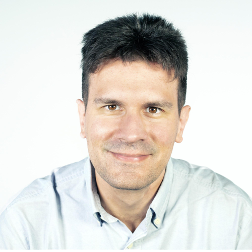
Erik Andersen

Description of Activities

The number of devices in these areas vastly outnumbers the number of human beings and this area is almost unprotected, which could have detrimental effects on our society. It is the hope that the project could be one way to enable a broader cybersecurity protection.

Fellow's country
Impact on SMEs (4th Open Call)
The involved standards are useful so that Europe is involved in this type of cybersecurity, which may affect future EU directives.
Impact on society (4th Open Call)
Every aspect of cybersecurity has a high priority. Access control needs to be timely in place to prevent unauthorised access.
Impact on society (6th Open Call)
This updated standard will allow users (relying parties) to access certificate information for the whole of Europe and be a significant contributor to the single market. The two priorities selected are cybersecurity and interoperability.
The whole scope of DPKI and the proposed access secure protocols are primarily related to cybersecurity. The proposed access protocol will use robust and trusted cryptographic algorithms to protect the protocols. It is prepared for migration to quantum resistant cryptographic algorithms (crypto agility).
In parallel, any communication protocol is designed for interoperability and the two proposed protocols are no exception. Interoperability is a necessity.
Organisation type
Organization
Independent Expert, Andersen's L-Service
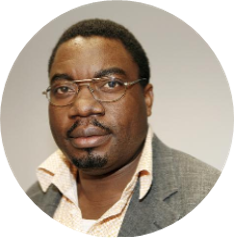
Portrait Picture
Andersen
Proposal Title (1st Open Call)
Second edition of Rec. ITU-T X.510 | ISO/IEC 9594-11
Proposal Title (2nd Open Call)
Key Management and Public-key infrastructure: Establishment and maintenance
Proposal Title (4th Open Call)
Role-based access control for electric power systems
IEC 62351-90-4, Migration of cryptographic algorithms
Proposal Title (6th Open Call)
Revision of ITU-T X.510 | ISO/IEC 9594-11
Role in SDO
Standards Development Organisation
StandICT.eu Year
2026
Year

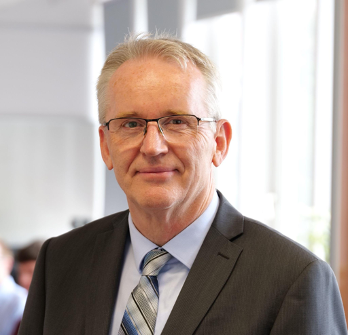
Pilar Orero

Description of Activities

The priority is to establish the human as the centre of the Metaverse, where the human has diverse capabilities.

Country
Spain
Fellow's country
Open Call Topics
Open Call
Organisation type
Organization
Researcher, Universitat Autònoma de Barcelona
Portrait Picture
Orero
Proposal Title (1st Open Call)
Accessibility in the Metaverse
Standards Development Organisation
Topic
Metaverse
StandICT.eu Year
2026
Year
Topic (1st Open Call)

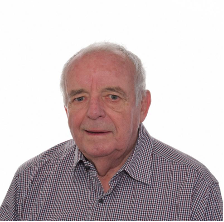
Jacak Witold

Description of Activities

Standards for basic quantum infrastructures such as quantum information encryption in future quantum networks can support innovation in quantum technology and accelerate its uptake by European SMEs.

Country
Belgium
Fellow's country
Open Call Topics
Impact on SMEs (6th Open Call)
Rapid advancements in quantum computation, communication and a recent surge in QIPC startups are reshaping the landscape for the European innovation. Initiatives like the European Quantum Flagship, alongside global R&D programs, are channeling billions of euros into developing breakthrough quantum solutions. SMEs, long a cornerstone of the European industry, are now poised to harness quantum standards for critical communication infrastructures, including qubit development, advanced encryption, and network interoperability. These standards, including QRNG standards, will further boost state-of-the-art cybersecurity, laying the foundation for a future quantum internet, driving sustainable techno-economic growth, and ensuring that European SMEs and society remain competitive in a rapidly evolving global market.
Organisation type
Organization
Chair of the Board of Directors & Coordinator of the EITCI Quantum Standards Group, European Information Technologies Certification Institute
Portrait Picture
Witold
Proposal Title (1st Open Call)
Launching generalised quantum cryptography standardisation
Proposal Title (3rd Open Call)
Standards for new on-chip Integrated Circuit Quantum Random Number Generator (ASIC QRNG) devices
Proposal Title (6th Open Call)
Promoting International Standardisation in Quantum Technologies and Quantum Communication
Role in SDO
Standards Development Organisation
Topic
Quantum Technology
StandICT.eu Year
2026
Year
Topic (1st Open Call)
Topic (3rd Open Call)
Topic (6th Open Call)

Ranganai Chaparadza

Description of Activities

The main challenge is related to addressing 5G security challenges towards Resilience to Attacks in 5G Networks.

Country
Germany
Fellow's country
Open Call Topics
Impact on SMEs (6th Open Call)
This NIST MDKP PWG GAFB Standard being developed for the New Ecosystem on Multi-Domain Knowledge Planes Driven Networking Era in 5G & 6G presents a tremendous opportunity for the adoption and use of global standards developed in Europe by ETSI in the USA market to steer commerce and open up new collaborations opportunities between USA and Europe stakeholders for commerce and innovation of services and GANA KP Platforms products by industrial players in these markets. This also has the effect of strengthening Europe's position in global standardisation initiatives thanks to the adoption of ETSI standards in the US for global reach and use outside Europe. Stakeholders benefit as follows: Telecommunications network operators/CSPs, Private Enterprises, Government Institutes, SMEs, or Research Institutes can expose network capabilities for use by other authorised parties when available within certain times for specific incentives (e.g., monetisation of the resources usage).
Impact on society (6th Open Call)
The following objectives of the NIST MDKP GAFB Specification provide unique Use Cases for 5G, 6G and Future Networks:
“Requirements for Enablers for Cross-Industry Sectors End-to-End (E2E) Services Innovation and Delivery Agility” that facilitate the leveraging of dynamic resources and assets availability in various sector domains when they are discoverable for use in dynamic on-demand network(s) and differentiated connectivity services formations; and/or application-layer service innovation, composition and delivery using the newly formed networks and connectivity services or ones already available such that they can serve the needs of the targeted application layer service(s).
New ecosystem on Cross-Industry Sectors End-to-End (E2E) Services Innovation and Delivery Agility (i.e., coined the “MD_KPs_Feds_For_5GnB ” Ecosystem) in which ETSI GANA Knowledge Plane (KP) Platforms (based on the ETSI TS 103 195-2) as Distributed Open Platforms (DOPs) that enable federated Autonomic/Autonomous Networking (ANs) should play role as anchors for the ecosystem, together with DOPs on the higher level, namely: Service Federation Orchestration & Autonomic Management & Control Platforms that dynamically place demands for differentiated and federated network connectivity services on the GANA (KP) Platforms.

This NIST MDKP PWG initiative presents a tremendous opportunity for the adoption and use of global standards developed in Europe by ETSI in the USA market to steer commerce and open up new collaborations opportunities between USA and Europe stakeholders for commerce and innovation of services and GANA KP Platforms products by industrial players in these markets. This also has an effect of strengthening Europe's position in global standardisation initiatives thanks to the adoption of ETSI standards in US for global reach and use outside Europe. A New Ecosystem is emerging from the NIST Specifications which have potential to reduce Carbon Emissions, thanks to Nework Sharing.
Organisation type
Organization
Senior Advanced ICT Technologies Consultant and Standardisation Expert on Evolving and Future Network Technologies, Altran Capgemini
Portrait Picture
ranganai
Proposal Title (1st Open Call)
Phase-2: STD Gen Framework: X-Dom Federated ETSI GANA KPs for 5G E2E Autonomic Security Man &Control
Proposal Title (3rd Open Call)
ITU-T FG-TBFxG Testbeds Federations Reference Model APIs Invocations Framework & Security Framework
Proposal Title (6th Open Call)
Specifications by the NIST MDKP PWG
Standards Development Organisation
Topic
5G & beyond 6G
StandICT.eu Year
2026
Year
Topic (1st Open Call)
Topic (3rd Open Call)
Topic (6th Open Call)