convenor

Available (36)

Showing 13 - 24 per page


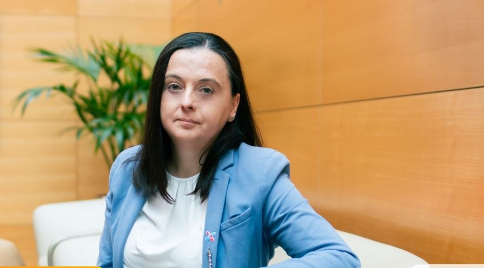
Sabine Mahr

Description of Activities

Incorporation of at least two sensory channels for information consumption is required by the European Accessibility Act, but currently not widely realized in technical communication. With its structured semantic approach, the proposed standard seeks to help eliminate this shortcoming.

Fellow's country
Impact on SMEs (4th Open Call)
A Digital Product Passport (DPP) will be required for almost any physical product, starting in 2026 for some product groups and then subsequently widening its application range. This means that all manufacturers are required to provide various sustainability-related data on their products, once they enter the European market.
With the advent of the DPP, technical communication will most probably either be part of the DPP or strongly intertwined with the information provided through it. Technical communicators who are capable of providing product information arranged into a machine-readable concept model of the product and its context of use are in high demand on the labour market and in the freelance consultant market. Approaching the modeling task in accordance with the principles that will be laid out in the NWIP will help them to perform their work more easily and in a well-structured manner.
Impact on SMEs (6th Open Call)
Digital representations of assets can be found not only in models, simulations and Asset Administration Shells of products, but also in the associated technical documentation that becomes increasingly modular and context-specific. The appropriateness of its semiotic modes, combination of multimodal elements and choice of output media highly depends on the product’s context of use, incorporating users’ capabilities, tasks and goals, physical, technical and organizational environments, and available resources.
The proposed standard supports technical communicators and similar roles in designing, structuring and delivering product-related information to users of that product. It provides advice on how to set up a style guide that determines what modes, multimodal elements and media are appropriate for specified contexts of product use. In SMEs, which cannot afford large technical communication departments with employees covering a broad range of expertise, this approach is essential for streamlining processes and adhering to legal requirements.
Impact on society (4th Open Call)
The information chunks that convey conceptual information will conform to the “Intelligent information for use” metadata scheme, so that they provide meta-information about their semantics and hence become machine-readable and semantically interoperable with other information, e.g., in other submodels of the AAS. Which is, on the other hand, a prerequisite for their accessibility via differing sensory modalities in humans and therefore for barrier-free communication. This aspect has gained in importance with the imminent entry into force of the European Accessibility Act in June 2025.
Impact on society (6th Open Call)
Technical documentation increasingly turns into a set of fine-grained technical information assets featuring semantics via metadata on context of use parameters. These information assets hence become machine-readable and semantically interoperable with other information, e.g., AAS or DPP submodels. Which is, on the other hand, a prerequisite for their accessibility via differing sensory modalities in humans and therefore for barrier-free communication. This aspect has gained in importance with the imminent entry into force of the European Accessibility Act in June 2025.
Open Call
Organisation type
Organization
word b sign Sabine Mahr
Portrait Picture
picture
Proposal Title (4th Open Call)
Representation of domain-specific concepts in digital twins and other technical information assets
Proposal Title (6th Open Call)
Contribution to the Standardisation of Digital Technical Documentation and User Information Models
Role in SDO
Standards Development Organisation
StandICT.eu Year
2026
Year
Topic (4th Open Call)
Topic (6th Open Call)

Cornelis J.M. Lanting

Fellow's country
Open Call Topics
Impact on SMEs (4th Open Call)
These new standards impact directly SMEs and other organisations that are affected as users of ICT equipment. It can also benefit SMEs deploying the potential of the USB-C with PD power supplies and chargers available on the market. Also SMEs are able introduce their own more intelligent and communicative power supplies and chargers
Impact on SMEs (6th Open Call)
SMEs encompasses users, service providers and developers of ICT equipment and services
All three categories have an interest in bringing down costs while increasing sustainability, reliablility and economic life time, and need guidelines to help them to suport and achieve this
Impact on society (4th Open Call)
Given the EU choice for the USB-C interface for charging and connection, it is now essential to make its use easy, successful and efficient, and reduce the risk of mismatch, unnecessary negative experiences and safety issues. A wide adoption will support the EU's initiative, and will increase the benefits beyond 'just' the Smartphone and Tablet domain, and enter the general rechargeable domain as the preferred standard.
Impact on society (6th Open Call)
This technical report (TR) will provide information and guidance on what is required to apply Circular-Economy Principles (CEP) to ICT equipment, services and usage. Applying Circular-Economy Principles is much more than being a bit Green, e.g. some reduction in the operational power consumption of network equipment.All parties involved, including the users, will have to make contributions to the realisation of CEP.Moreover, this TR is intended to be the basis for a set of standards on the implementation of Circular-Economy Principles to ICT equipment, services and usage.

The targeted impact includes:
increased effective economic life time of products
reduced resource consumption, including energy and scarse materials
better management of usage and recycling of materials, including scarse resources
Open Call
Organisation type
Organization
DATSA Belgium
Portrait Picture
picture
Proposal Title (4th Open Call)
Adaptive and multiple output power supplies based on USB Type C connector and USB PD support
Proposal Title (6th Open Call)
Contribution to ICT Standardisation for Sustainability and Energy Management of Multi-Service Digital Environments
Role in SDO
Standards Development Organisation

StandICT.eu Year
2026
Year
Topic (4th Open Call)
Topic (6th Open Call)

Rembrandt Koppelaar

Fellow's country
Impact on SMEs (4th Open Call)
The project contribution in terms of the CWA under development will support SMEs that want to or are required legally to have a DPP for their products, which is a majority of SMEs in Europe. Close to 30 product categories are expected to be mandated to have a DPP in the mid-term future. To ensure the CWA effort is impactful for SMEs consideration is made of CEN-CENELEC GUIDE 17: Guidance for writing standards taking into account SME needs (2010). The impact on these SMEs is expected in terms of accelerating their journey to develop and set up their Digital Product Passport. By providing a concise guidance document that has been developed as a CWA pre-standard for understanding the scope, context, potentials and design and implementation decisions for Digital product passports.
Impact on society (4th Open Call)
The CWA will also benefit European society by supporting economic actors to understand how DPPs can support their activities by enabling new information generation mechanisms and sharing for a circular economy.
Open Call
Organisation type
Organization
CWA EcoWise Ekodenge Ltd
Portrait Picture
picture
Proposal Title (4th Open Call)
Guidelines to create a Digital Product Passport (CWA)
Role in SDO
Standards Development Organisation

StandICT.eu Year
2026
Year

Annegrit Seyerlein-Klug

Description of Activities

Annegrit's priority is the Convenorship of CEN CENELEC JTC21 WG 5,  the organisation and project support to work on the AI Act standardisation request for Cybersecurity. This includes a close collaboration with other groups within JTC 21, JTC 13, ISO IEC SC 42 and SC 27 to collect all information of existing and work under development. The main challenge is that JTC 21 and also our WG5 has a diverse structure of experts and knowledge, which makes the work, the effort and efficiency very difficult. In this case, the challenge in addition is the collaboration with other existing standardisation groups within JTC 21 as well as with JTC 13 for Cyber Resilience Act, with ETSI and their view, with ISO IEC SC 27 and SC 42.

Fellow's country
Impact on SMEs (4th Open Call)
Contributing activity for a new work item NWIP within CEN CENELEC JTC 21 WG5 “Artificial Intelligence - Cybersecurity specifications for AI systems” and developing the standard on the basis of the gap report.
Impact on SMEs (7th Open Call)
A lot of European SME and/or European societies will be affected in the one or other way from AI-systems in the future in all areas of our living environment, from AI in medical devices, in personal equipment over autonomous driving until general purpose AI systems like chat gpt or Metaverse platforms. The challenge is to align the standards with the regulation but also with the needs of SME and European values. For this reason, the AI Act asked for standards, which CEN/CENELEC is developing.
Impact on society (4th Open Call)
Cybersecurity is elementary for every digital asset and very important also for AI-Systems as a digital asset to be secure, safe, healthy and respecting fundamental rights.
Impact on society (7th Open Call)
The proposed activity aims to answer the official EU standardization request for the EU AI Act and specifically No. 8 Cybersecurity. Thrustworthy Metaverse solutions are based on trustworthy AI solutions. Trust and cybersecurity of AI and Metaverse can be ensured with well developed standards from cybersecurity and AI experts with business background. In case of the European Union harmonized standards as presumption of conformity to the EU Regulation are requested, in this case the request is for the AI Act and CRA as an essential fundament for a trustworthy and secure web 4.0 with virtual world and Metaverse with the specific EU focus on safety, fundamental rights, health and data protection.
Open Call
Organisation type
Organization
neurocat GmbH
Portrait Picture
Annegrit Seyerlein-Klug
Proposal Title (4th Open Call)
Convenorship for AI Act Standardization Request CEN CENELEC JTC 21 WG Cybersecurity
Proposal Title (7th Open Call)
Secure Metaverse by using EU harmonized standard for Cybersecurity for Artificial Intelligence
Role in SDO
Standards Development Organisation

StandICT.eu Year
2026
Year
Topic (4th Open Call)

Stéphane Joret

Description of Activities

Understanding how to work in international standardisation committees is vital, which implies going beyond IT asset management microcosm to deliver more value to related disciplines such as cybersecurity or sustainability. 

Fellow's country
Open Call Topics
Impact on SMEs (4th Open Call)
ISO 19770-10 target audience is organisations that want to improve their IT asset management. This includes SMEs such as practitioners and improvers in public and private organisations, ITAM consultants, ITAM trainers and training providers.
Impact on SMEs (7th Open Call)
ISO 19770-10 target audience is organizations that want to improve their IT asset management. This includes SMEs such as practitioners and improvers in public and private organizations, ITAM consultants, ITAM trainers and training providers.
Impact on society (4th Open Call)
Simplified ITAM adoption, thanks to practical guidance and appropriate skill development, can financially benefit all European public and private organisations, reduce the European impact of ICT on the environment, and reduce economic and technological dependence on non-European companies.
Impact on society (7th Open Call)
Simplified ITAM adoption thanks to practical guidance and appropriate skill development can be financially beneficial to all public and private organizations in Europe, can reduce European impact of ICT on the environment, and reduce economic and technological dependence on non-European companies. The impact can be huge, as IT assets are everywhere, notably with a growing presence in the industry. Trustworthy data about IT assets is a key enabler for IT security that is now crucial in the context of hybrid war at the European eastern border.
Open Call
Organisation type
Organization
Senior expert consultant in ITSM and ITAM, Liscience
Portrait Picture
joret
Proposal Title (4th Open Call)
Guidance (ISO 19770-10) for implementing IT asset management
Proposal Title (7th Open Call)
Guidance (ISO 19770-10) for implementing IT asset management
Role in SDO
Standards Development Organisation

StandICT.eu Year
2026
Year
Topic (4th Open Call)
Topic (7th Open Call)

Paul Ferris

Description of Activities

This fellowship project has prioritised ‘gap areas’ where the lack of adequate DLT/Blockchain standards is slowing the formulation of government regulations and cross border agencies, or where ambiguity of language is causing confusion or slowing integration of distributed systems.

Fellow's country
Impact on SMEs (2nd Open Call)
This ISO features on my work at ISO/TC 307 and AG1 and explains the societal impacts of trust across finance, supply chains, digital trust, data provenance, Energy trading, records management, Anti-counterfeit pharma and food safety and provenance.
Impact on SMEs (6th Open Call)
There are a confusing range of possibilities that SME's are unlikely to be equipped to assess without a set of dependant standards to guide them. The criteria for such decisions needs examination, the approach and comparative measurement needs standards to be effective. This project links the SMEs operating in the business arena and the standards development to support their operations. Sustainability standards often have conflicting objectives, so a specific plan to develop appropriate standards to the benefit of the EU does affect the global community.
Impact on society (2nd Open Call)
This project makes the links between the SMEs operating in the business arena and the standards development to support their operations.
Open Call
Organisation type
Organization
Technical Expert, European Distributed Computing Association
Portrait Picture
Ferris
Proposal Title (2nd Open Call)
Developing the ISO/TC307 Technical Committee Strategy for Standards Development in Blockchain & DLT
Proposal Title (6th Open Call)
develop a strategy and business plan for the ISO/TC307 Technical Committee
Role in SDO
Standards Development Organisation

StandICT.eu Year
2026
Year

Geoffrey Goodell

Description of Activities

Through this fellowship project, I am directly pursuing the development, approval, and publication of the following standards: ISO 22739:2024 ‘Blockchain and Distributed Ledger Technologies – Vocabulary’, ISO/TR 24332  ‘Blockchain and Distributed Ledger Technology in relation to authoritative records, records systems, and records management’ and ISO/NP 24982 ‘Digital currencies – Vocabulary’.

Fellow's country
Impact on SMEs (2nd Open Call)
These applications facilitate and enhance a wide variety of commercial activities among European businesses and feature prominently in active development of European regulations, including but not limited to eIDAS, EBSI, and some ECB initiatives on the development of a digital euro.
Impact on SMEs (5th Open Call)
DLT can facilitate and enhance a wide variety of commercial activities among European businesses and feature prominently in active development of European regulations, including but not limited to eIDAS and EBSI.
Impact on society (2nd Open Call)
Distributed ledger technology offers an opportunity to promote better management of data within public services, including for accounting and records management, as well as for electronic payments, particularly in the context of digital currencies, which represent an opportunity for central banks and financial regulators to provide a public payment mechanism that citizen-consumers can use independently of potentially exclusive custodial relationships.
Impact on society (5th Open Call)
Distributed ledger technology offers an opportunity to promote better management of data within public services, including for accounting and records management, as well as for electronic payments, particularly in the context of digital currencies, which represent an opportunity for central banks and financial regulators to provide a public payment mechanism that citizen-consumers can use independently of potentially exclusive custodial relationships.
Open Call
Organisation type
Organization
Lecturer, University College London
Portrait Picture
Geoffrey
Proposal Title (2nd Open Call)
Core Standards for Blockchain and Distributed Ledger Technology and Digital Currencies
Proposal Title (5th Open Call)
Core Standards for Blockchain and Distributed Ledger Technology and Digital Currencies
Role in SDO
Standards Development Organisation

StandICT.eu Year
2026
Year

João Manuel Leitão Quintas

Description of Activities

My fellowship aims to contribute to ongoing efforts related to standardisation and European policy, advising on topics related mainly to Robotics and Autonomous Systems and Artificial Intelligence.

Fellow's country
Impact on SMEs (2nd Open Call)
SMEs related to robotics and/or developing artificial agents with a certain degree of autonomy can be impacted by this contribution, as the standard being developed aims to bring added value for integration and interoperability in solutions based on robotic and autonomous systems.
Impact on SMEs (4th Open Call)
SMEs related to robotics and/or developing artificial agents with a certain degree of autonomy can be impacted by this contribution, as the standard being developed aims to bring added value for integration and interoperability in solutions based on robotic and autonomous systems.
Impact on society (2nd Open Call)
Solutions integrating robotics and autonomous systems that adhere to the standard should result in more interoperable, intelligent, sustainable, and cost-effective technologies, enabling people. to carry out tasks related to personal assistance.
Impact on society (4th Open Call)
One of the direct impacts of my activity is widening the stakeholders' network that can also learn from the standard development and share domain-specific information that is relevant to implement use cases for the standard. It may be of particular interest to the TEF-Health European Project, which is establishing a test and experimentation facilities network across the EU, and I am part of the team and IPN which is leading the Portuguese node.
Open Call
Organisation type
Organization
Coordinator of RTD unit - Laboratory of Automatics and Systems, Instituto Pedro Nunes
Portrait Picture
Joao
Proposal Title (2nd Open Call)
Contribution to a new standard for autonomous robotic systems IEEE1872.3
Proposal Title (4th Open Call)
Contribution to new standard for autonomous robotic systems IEEE1872.3
Role in SDO
Standards Development Organisation

StandICT.eu Year
2026
Year
Topic (2nd Open Call)
Topic (4th Open Call)

Pierre-François Jullien

Description of Activities

There is a growing need for information about building services systems during the planning and design of buildings. The designers in building services must execute detailed calculations and simulations to ensure saving of energy and to satisfy hygienic and comfort criteria in heating, ventilation, air conditioning, and sanitary plants. 

Fellow's country
Impact on SMEs (2nd Open Call)
This standard will permit the development of HVAC product catalogues that are not dedicated to a single manufacturer, but may include products from both large manufacturers and SMEs. Without such a standard, each manufacturer must develop its own, proprietary, product catalogue, which represents a cost that an SME manufacturer cannot afford.
Impact on SMEs (4th Open Call)
This standard will permit the development of HVAC product catalogues that are not dedicated to a single manufacturer but may include products from both large manufacturers or SMEs. Without such a standard, each manufacturer has to develop its own, proprietary, product catalogue, which represents a cost that an SME manufacturer cannot afford.
Impact on society (2nd Open Call)
EN ISO 16757-5 will also enable calculation software suppliers to integrate all BIM catalogues complying with the standard, with a single exchange format. This will enable software users to seamlessly browse products described in different product catalogue platforms.
Open Call
Organisation type
Organization
CEO, Atalane
Portrait Picture
PF
Proposal Title (2nd Open Call)
Contribute to prISO 16757-5
Proposal Title (4th Open Call)
Contribute to the Formal Draft of EN ISO 16757-5
Role in SDO
Standards Development Organisation
StandICT.eu Year
2026
Year

Loïc Blaive

Description of Activities

With this fellowship, I aim to consolidate the European activities and strengthen the European participation in my ISO work group which is yet too limited. In terms of international developments, the priority has been set to the final consolidation of the ISO 22726 series.

Fellow's country
Impact on society (2nd Open Call)
Standardisation of maps for connected and automated driving systems is a cornerstone for the deployment of such vehicles I see that it will indirectly have societal impacts on two key aspects: firstly, it contributes to the GHG emission reduction through a better use of vehicle engine, and secondly, I will favour societal inclusion of elderly and/or disabled people by keeping their ability to move.
Open Call
Organisation type
Organization
Independent expert, Loïc Blaive ITS Mobilités Conseils EIRL
Portrait Picture
Blaive
Proposal Title (2nd Open Call)
Development of ITS geographic data standardisation for highly automated driving - Phase 3
Role in SDO
Standards Development Organisation
StandICT.eu Year
2026
Year
Topic (2nd Open Call)

Kate Grant

Description of Activities

Identifying standardisation gaps and creating road maps is essential for ensuring technology development addresses key problem areas.  

Fellow's country
Open Call Topics
Impact on SMEs (2nd Open Call)
Elaboration of use cases for technology and emerging technology can help SMEs exploit their work in multiple application areas and help ensure that their products are interoperable and accessible.
Impact on society (2nd Open Call)
IoT is a pervasive technology used across many industries and increasingly it is benefitting consumers by providing access to many systems and facilities from home. It is important that the current moves to online government, banking, shopping etc does not create a digital divide but includes all people.
Open Call
Organisation type
Portrait Picture
grant
Proposal Title (2nd Open Call)
Study of IEC System committee use cases and their relevance to JTC 1 standardisation
Role in SDO
Standards Development Organisation
StandICT.eu Year
2026
Year
Topic (2nd Open Call)

Lauriane Aufrant

Description of Activities

Overall, I am taking a more holistic view of the AI standardisation roadmap while pursuing in parallel my contributions to specific AI standards in SC 42 and JTC 21.

Fellow's country
Open Call Topics
Impact on SMEs (2nd Open Call)
While it is feared that a large number of standards associated with the AI Act could create an excessive burden for SMEs to understand and implement the new requirements, on the other hand, if there remain gaps in the standards’ coverage of the AI landscape, this will create huge challenges for SMEs whose products sit precisely in such areas (inability to comply).
Impact on SMEs (4th Open Call)
There is growing concern regarding the impact of the upcoming AI Act on the activity of SMEs in that field. While it is feared that a large number of standards associated to the AI Act could create an excessive burden for SMEs to understand and implement the new requirements, on the other hand if there remain gaps in the standards’ coverage of the AI landscape, this will create huge challenges for SMEs whose products sit precisely in such areas (inability to comply). I have started to make increased efforts to reach out to SMEs and collect their views and needs in those regards, and I am leveraging those inputs throughout my contributions in the various standards as well as in coordination.
Impact on SMEs (6th Open Call)
There is growing concern regarding the impact of the upcoming AI Act on the activity of SMEs in that field. While it is feared that a large number of standards associated to the AI Act could create an excessive burden for SMEs to understand and implement the new requirements, on the other hand if there remain gaps in the standards’ coverage of the AI landscape, this will create huge challenges for SMEs whose products sit precisely in such areas. I have started to make increased efforts to reach out to SMEs and collect their views and needs in those regards, and I am leveraging those inputs throughout my contributions in the various standards as well as in coordination.
In parallel, and beyond the considerations for the AI Act, I am also including in my work continuous considerations for interoperability aspects, which appear to be key to enable easier entry into the market for European SMEs.
Impact on society (2nd Open Call)
My work serves as support to the preservation of consumer rights, by enabling more transparency, comparability, and clarity on the actual performance of AI systems in the market.
Impact on society (4th Open Call)
My efforts are currently focused on answering the standardisation request that CEN-CENELEC JTC21 received from the European Commission in relation to the AI Act. As the target dates grow closer, it seems that the current pool of experts is not sufficient to answer the diverse needs expressed in the request. I have thus initiated reinforced outreach efforts, as well as onboarding sessions for new experts.
Organisation type
Organization
NLP lead scientist for Defense and security applications, Inria
Portrait Picture
affront
Proposal Title (2nd Open Call)
Towards accurate, transparent, and explainable systems in AI and NLP, in support of the AI Act
Proposal Title (4th Open Call)
Supporting the AI Act with standards for trustworthy systems and datasets in AI and NLP
Proposal Title (6th Open Call)
R in ISO/IEC AWI 24970 on AI logging, in JTC 21’s work item JT021024 on AI Risk Management, JT021029 cybersecurity of AI systems, or JT021039 quality management system for regulatory purposes.
Role in SDO
Standards Development Organisation
StandICT.eu Year
2026
Year
Topic (2nd Open Call)
Topic (6th Open Call)