OC#3 2026

Available (32)

Showing 1 - 12 per page


Torbjörn Lahrin

Description of Activities

Local Digital Twins will be a fundamental building block for CitiVerse. It will also play a crucial role for anyone in the public sector who wants to fully utilize the usage of AI.
Today, cities, regions and countries all over the world are building Local Digital Twins using various tools and approaches. Game engines, CAD tools, GIS, AR/VR/XR tools, Urban Digital Platforms, CIM and other visualisation tools are used. Thus a wide spread of technologies and standards. 
Interoperability for Local Digital Twins (LTD) is crucial. They need to fit horizontally and vertically. Horizontally is to put a LDT of one city next to a LDT of another city and make them align. Vertically, by example, a LDT produced by a city must fit LDT from public transportation and LDT by the energy company for the same geographical area, etc. 

European CitiVerse will be built upon Local Digital Twins. If separate Local Digital Twins in Europe don't fit together it will be impossible to create a seamless CitiVerse. It will also be difficult with interoperability between LDT:s. The LDT also needs interoperability versus dataspaces and IoT. For a LDT:s to be useful for officials and others, LDT:s need interoperability with the business operating systems used by officials on a daily basis. 

In this sense, in the framework of my fellowship, my JWG has sent a survey to many major LDT projects around the world, and we are now gathering the results and statistics.  The result will be a gap analysis and a technical report, which will enable advice to all relevant major SDO:s on how to develop or change their standards to fit better together. 

Country
Sweden
Fellow's country
Impact on SMEs (7th Open Call)
Investing in Local Digital Twins and CitiVerse is today rather challenging. All technologies for creating LDT:s or CitiVerse have their strengths and weaknesses. Any investment made today is therefore associated with a rather high degradation of uncertainty. Still, the SME:s and Europe must invest already now in these technologies to have a chance to be “on the train” and ahead in the competition. However, this also comes with a large risk that European SME:s and, in the broader scope, the European societies to some extent might find themselves investing in the “wrong” direction with techniques and methods that will not be long lasting.
To know what other actors are doing all around the world will help stakeholders to navigate and to invest in “right” directions with long term safer investments. Once we get an international reference architecture for LDT:s in place this will give even more security for those parties following the international standard.
Impact on SMEs (9th Open Call)
Investing in Metaverse and CitiVerse is today rather challenging. All technologies for creating Metaverse, CitiVerse and underlaying Local Digital Twins have strengths and weaknesses. Such investments are therefore associated with a rather high degrade of uncertainty. Still, the SME:s and European societies must invest already now in these technologies to have a chance to be “on the train” and ahead in the competition. Also for implementing various parts of CitiVerse related to EU calls. However, this come with a large risk investing in the “wrong” direction with technique and methods that will not be long lasting.
Because of this European SMEs and societies will benefit from the creation and coordination of standards for Metaverse. They will also benefit from gaining knowledge about the international standardization, as such knowledge will help SME:s and societies of Europe to navigate and to invest in “right” directions with long term safer investments.
Impact on society (9th Open Call)
The work is laying the foundation for uniting the world in how to build Local Digital Twins (Urban Digital Twins and City Information Modelling) and how to make these interoperable with each other both horizontal, vertical and towards underlaying data sets and daily operation systems of cities and other authorities. It is also paving the road for how Local Digital Twins can be used as the foundation for building CitiVerse.
Organization
Lahrin i Hajstorp AB
Portrait Picture
picture
Proposal Title (3rd Open Call)
JWG between ISO/IEC JTC1 and IEC/SyC Smart Cities on Local Digital Twins
Proposal Title (7th Open Call)
GAP Analysis, Reference Architecture and Ontology for Local Digital Twins
Proposal Title (9th Open Call)
JTC1 CG2 - Strategic Coordination Group on Metaverse
Gap analysis, reference architecture and ontology for local digital twins
Role in SDO
Standards Development Organisation
StandICT.eu Year
2026
2029
Year
Topic (3rd Open Call)
Topic (7th Open Call)
Topic (9th Open Call)

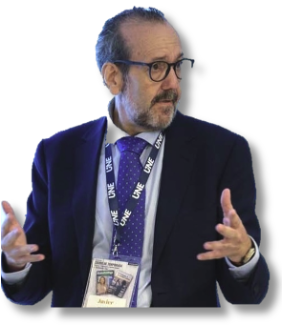
Javier Peris

Description of Activities

In this fellowship, the main priority focuses on helping organisations to drive innovation and technological transformation using the Centre of Excellence (CoE) as the best management mechanism in a context of a shortage of professional profiles with expertise in Artificial Intelligence and other disruptive technologies.

Fellow's country
Open Call Topics
Impact on SMEs (5th Open Call)
The main opportunity for SMEs is their incorporation to a future sectorial cluster type and other potential movements of knowledge collectivisation.
Impact on SMEs (8th Open Call)
European small organisations do not have the experts or economic resources to hire specialised AI consultants, so they must postpone the application of AI in their businesses. This generates a new delay in their innovation gap. The main opportunity for SMEs is their incorporation to a future sectorial cluster type, laboratory of a City Hall, and other potential movements of knowledge collectivisation. Creating a standard on how to constitute and manage an AI Center of Excellence enables European small companies to have a higher success rate in AI innovation initiatives, making them easier to realise and reducing risk.
Impact on SMEs (9th Open Call)
Create a standard reference model for AI productivity support and automation that helps ICT professionals, teams, and departments to be more productive, focused on value creation and with better time management .ill impulse SMEs and VSMEs competitiveness opportunities. Achieving high levels of performance in ICT areas will also allow SMEs to accelerate their digital transformation.
Impact on society (9th Open Call)
Currently there are no standards dedicated directly on helping ICT professionals organise their lives. This standard will help professionals to better organise their goals and work, which will improve work-life balance. As professionals improve their organisational and productivity skills in ICT areas, this improvement will spread to other areas of the company and to society in general.
Organisation type
Organization
Business, Technology & Best Practices, S.L.
Portrait Picture
Peris
Proposal Title (3rd Open Call)
AI-CoE: Artificial Intelligence for Business powered by Center of Excellence. TR standard
Proposal Title (5th Open Call)
AI-CoE Phase II: Artificial Intelligence for Business powered by Center of Excellence. Model and TS
Proposal Title (8th Open Call)
AI-CoE Phase-III: Proof of Concept of the CoE Reference Model on Artificial Intelligence Adoption
Proposal Title (9th Open Call)
AIxPP: Artificial Intelligence framework to improve Professional Productivity. TS Standard
Role in SDO
Standards Development Organisation
StandICT.eu Year
2026
2029
Year
Topic (3rd Open Call)
Topic (5th Open Call)
Topic (9th Open Call)

Julian Lauten-Weiss

Description of Activities

In my role as a circular economy expert, I actively contribute to the advancement of Smart Circular Economy Standards for Europe. I ensure that standards align with EU policies like the European Green Deal, advocating for their integration into standardisation efforts. 

Fellow's country
Impact on SMEs (6th Open Call)
Especially SMEs lack sufficient funds to develop the internal capabilities to transition to circular business models. Bringing the ISO 59000 family of standards in line with European policies and regulations makes it not just easier to fulfil legal requirements but to also go beyond short-term requirements and gain a competitive advantage by transitioning to circular business models.
Impact on SMEs (8th Open Call)
In particular, SMEs often lack sufficient funds to develop the internal capabilities necessary for transitioning to circular business models. Harmonizing the work in CEN/TC WG 2 and WG 4 and ensuring compatibility with European policies and regulations makes it easier to not just fulfil legal requirements but to also go beyond short-term requirements and gain a competitive advantage by transitioning to circular business models.
Impact on society (6th Open Call)
Transitioning to a circular economy has profound societal impacts by promoting sustainability, resource efficiency, and economic resilience. It fosters a reduction in waste and pollution, which enhances environmental quality and public health. By encouraging businesses to design for longevity, repairability, and recyclability, it creates new job opportunities and stimulates innovation across industries. Additionally, it empowers communities to engage in sustainable practices and reduces dependency on finite resources. Overall, a circular economy nurtures a more sustainable, inclusive, and resilient society, aligning economic activities with long-term environmental and social well-being.
Impact on society (8th Open Call)
Transitioning to a circular economy has profound societal impacts by promoting sustainability, resource efficiency, and economic resilience. It promotes a reduction in waste and pollution, thereby enhancing environmental quality and public health. Encouraging businesses to design for longevity, repairability, and recyclability creates new job opportunities and stimulates innovation across industries. Additionally, it empowers communities to adopt sustainable practices and reduces their dependency on finite resources. Overall, a circular economy nurtures a more sustainable, inclusive, and resilient society, aligning economic activities with long-term environmental and social well-being.
Organisation type
Organization
Circular Economy Researcher, Lecturer and Consultant, Bergische Universität Wuppertal
Portrait Picture
Lauten
Proposal Title (3rd Open Call)
Smart Circular Economy Standards for Europe
Proposal Title (6th Open Call)
Contribution to ICT Circular Economy Standardisation: Interoperable DPPs and E-Waste Management
Proposal Title (8th Open Call)
Harmonizing Digital Product Passports and Circular Business Models
Role in SDO
Standards Development Organisation
StandICT.eu Year
2026
2029
Year

Gero Gschwendtner

Description of Activities

There is a strong emphasis on safety, accessibility, energy & environment and highly relevant for the future ISO/TC 178 activities are also focusing now to a strong extent on ICT.

Fellow's country
Open Call Topics
Impact on SMEs (3rd Open Call)
ISO/TC 178 has a liaison to:
- ELA European Lift Association
- SBS - Small Business Standards with EFESME (European Federation for Elevator Small and Medium-sized Enterprises aisbl) as an expert member for lifts.
Both associations are highly interested in this topic and with this liaison they participate actively at the ISO/TC 178 meetings as well as at the relevant WG meetings.
Chairing the meeting and giving them also relevant time in the meetings to talk and bring up their issues is essential for them; this is under my responsibility and highly considered within my leadership.
Impact on SMEs (4th Open Call)
ISO/TC 178 has a liaison to:
- ELA European Lift Association
- SBS - Small Business Standards with EFESME (European Federation for Elevator Small and Medium-sized Enterprises aisbl) as an expert member for lifts.
Both associations are highly interested in this topic and with this liaison they participate actively at the ISO/TC 178 meetings as well as at the relevant WG meetings.
Chairing the meeting and giving them also relevant time in the meetings to talk and bring up their issues is essential for them; this is under my responsibility and highly considered within my leadership.
Impact on SMEs (7th Open Call)
ISO/TC 178 maintains liaisons with:
The European Lift Association (ELA)
Small Business Standards (SBS), with EFESME (European Federation for Elevator Small and Medium-sized Enterprises aisbl) participating as an expert member for lifts.
Both organisations are deeply engaged in this field and actively contribute to ISO/TC 178 and its relevant working group (WG) meetings through these liaisons.
Impact on SMEs (9th Open Call)
ISO/TC 178 actively engages with European SMEs through formal liaisons with the European Lift Association (ELA) and SBS–Small Business Standards, where EFESME represents SME interests. Both organizations participate directly in ISO/TC 178 and working group meetings, especially on ICT-related topics.
As Chair, I ensure their input is given sufficient time and weight, allowing SMEs to raise concerns and contribute to shaping standards — even when this means balancing strong positions from larger companies. This inclusive governance ensures that standards reflect the realities of both major manufacturers and smaller industry players.
Impact on society (3rd Open Call)
Lifts, escalators and moving walks are essential elements for the transportation of society.
With this work safe access and accessibility for all is provided. Furthermore, this work encompasses energy efficiency and adherence to the United Nations’ sustainability goals namely 7, 8, 9, 10, 11, 12, and 13 which are integral components of the standards.
Impact on society (4th Open Call)
Lifts, escalators and moving walks are essential elements for the transportation of society. With this work safe access and accessibility for all is provided. Furthermore, this work encompasses energy efficiency and adherence to the United Nations' sustainability goals namely 7, 8, 9, 10, 11, 12, and 13 which are integral components of the standards.
Impact on society (7th Open Call)
Until 2022, the lift and escalator industry lacked dedicated ICT standards—aside from those addressing cybersecurity. Initially, the approach within ISO and CEN was to integrate all relevant topics directly into the core product standards, often referred to as the "product bible": ISO 8100-1/2 and ISO 8103-1. Notably, ISO 8103-1 was published at the end of 2024 as a new global escalator standard, mirroring the European EN 115-1 requirements. This marked a major milestone for the industry, as it was the first time that European safety standards for escalators and moving walks would be applied globally.

As the field evolved and specific topics became increasingly complex, supplementary standards were introduced to support and expand upon the core documents.

It soon became apparent that ICT, due to its rapid advancement, remained insufficiently covered. In response, a strategic initiative was launched to assess the situation, define a roadmap for the future, and close this gap. Developing new standards and technical specifications in this area is now a top priority (further details in the following chapters).

At the same time, the core product standards must continue to be maintained, with general ICT aspects gradually integrated into them.
Another major challenge faced by ISO/TC 178 and the global lift and escalator sector is the current dynamic in China. The country is rapidly developing its local standards, with significantly shorter release timelines and fewer stakeholders involved compared to the ISO and CEN processes. This highlights the critical need for SAC to remain actively engaged in ISO and to adopt ISO standards as national standards. To address this, additional partnerships have been formed, and regular exchange meetings are held to ensure the highest possible level of influence and alignment.
Impact on society (9th Open Call)
Lifts, escalators, and moving walks are vital for ensuring safe and efficient access to buildings. Globally, there are over 18 million lifts and escalators in operation, with nearly half located in Europe. Each year, more than 1 million new units are installed. Approximately 325 million passengers use lifts daily, while escalators and moving walks support over 10 billion rides every day.
In the coming decades, the population aged 65 and above is projected to grow by nearly 33%, with those over 80 doubling in number. As the global population ages, accessibility becomes increasingly critical. Multi-floor buildings will require vertical transportation systems, including lifts, escalators, stair lifts, and platform lifts, to accommodate the growing demand for accessible infrastructure.
As essential components of building functionality, lifts, escalators, and moving walks are classified as modes of transport. They ensure safe access for all and are designed for free and independent use by passengers. This underscores the importance of robust safety measures to protect users.
By establishing harmonized safety and performance standards, these efforts support the development of resilient, accessible, and low-impact urban environments that are better prepared for demographic and environmental change.
Organisation type
Organization
Prof. Mechanical Engineering (HTL St. Pölten) and Independent Consultant, Gschwendt
Portrait Picture
gero
Proposal Title (3rd Open Call)
Lifts and Escalators in Smart Cities
Proposal Title (4th Open Call)
Lifts and Escalators in Smart Cities
Proposal Title (7th Open Call)
Lifts and Escalators in Smart Cities
Proposal Title (9th Open Call)
Lifts and Escalators in Smart Cities
Role in SDO
Standards Development Organisation
StandICT.eu Year
2026
2029
Year
Topic (3rd Open Call)
Topic (4th Open Call)
Topic (7th Open Call)
Topic (9th Open Call)

Olivier Genest

Description of Activities

My work supports the development of smart energy grids, allowing to integrate a high share of renewable energy sources and to support new usages such as transports electrification (e-mobility). 

Fellow's country
Impact on SMEs (2nd Open Call)
My activities in IEC SyC Smart Energy and ISO/IEC JTC1/SC41 allow me to be aware of on-going standards development in the field of IoT and Smart Energy, which is crucial for a SME providing consulting and expertise on innovation.
Additionally, when worldwide standards are better aligned with the EU R&I ecosystem, it makes it easier for European SMEs to make business at worldwide level (less specific development). Finally, when the EU R&I ecosystem, including SMEs, is better aware of the standards, its players can develop solutions which are already aligned to worldwide practices.
Impact on SMEs (5th Open Call)
Firstly, my company Trialog is a European SME, which is impacted by my contribution. In particular, my activities in IEC SyC Smart Energy and ISO/IEC JTC1/SC41 allow me to be aware of on-going standards development in the field of IoT and Smart Energy, which is crucial for a company providing consulting and expertise on innovation. Also, my activities in the EU R&I ecosystem allow me to share experience based on our R&I projects and to learn from the experience of other projects and actors.
Secondly, the European SMEs from the smart energy sector, in particular those involved in EU R&I projects. Especially, worldwide standards are better aligned with the EU R&I ecosystem, making it easier for European SMEs to make business at worldwide level.
Impact on society (2nd Open Call)
My work supports the development of smart energy grids, allowing to integrate a high share of renewable energy sources and to support new usages such as transports electrification (e-mobility). Smart energy grids also enable a more efficient operation of the energy systems (i.e. less energy losses) and foster an active commitment of grid users (i.e. consumers or prosumers) towards the energy transition.
Organization
Director, Trialog
Portrait Picture
genest
Proposal Title (2nd Open Call)
Bridging the gap between EU R&I ecosystem and worldwide standardisation on Smart Energy
Proposal Title (3rd Open Call)
Bridging the gap between EU R&I ecosystem and worldwide standardisation on Smart Energy
Proposal Title (5th Open Call)
Bridging the gap between EU R&I ecosystem and worldwide standardisation on Smart Energy
Role in SDO
Standards Development Organisation
StandICT.eu Year
2026
Year
Topic (2nd Open Call)
Topic (3rd Open Call)
Topic (5th Open Call)

Christophe Ozcan

Description of Activities

With this fellowship, the aim is to create and continue working on a Technical standard proposal, and I decided to push such action to Joint Working Group 4 which is directly in liaison with ISO/SC27 in charge of the security of IT systems. 

Fellow's country
Open Call
Organisation type
Organization
CEO Crypto4All
Portrait Picture
ozcan
Proposal Title (3rd Open Call)
Smart Contract Auditing guidelines
Standards Development Organisation
StandICT.eu Year
2026
2029
Year

Raul Sanchez-Reillo

Description of Activities

This standardisation project will boost the creation of a certification system for biometric solutions to be used in different scenarios. One of the first scenarios to be addressed is the remote identification of citizens using videoconference tools, i.e., using facial recognition with the users’ own personal devices (either computers or mobile devices).

Fellow's country
Impact on SMEs (2nd Open Call)
When the European Identity Wallet will be defined, all service providers will have to adapt their services to use that wallet. Most service providers are either SMEs or use solutions developed by SMEs, so the definition of that identity wallet will have a major impact on the activities of those SMEs, increasing their workload, and therefore, their benefits.
Impact on SMEs (4th Open Call)
When the European Identity Wallet will be defined, all service providers will have to adapt their services to use that wallet. Most of services providers are either SMEs or use solutions developed by SMEs, so the definition of that identity wallet will have a major impact on the activities of those SMEs, increasing their workload, and therefore, their benefits.
Impact on SMEs (5th Open Call)
Many final solution integrators are SMEs, and they are the ones having to convince the final customer with the benefits of using their products. This is typically a challenge of these SMEs, compared to multinational enterprises. This certification scheme will allow SMEs to provide convincing certification, to all different customers, through a single evaluation, closing the gap with big enterprises, and improving their market ratio.
Impact on SMEs (8th Open Call)
When the European Identity Wallet will be defined, all service providers will have to adapt their services to use that wallet. Most of services providers are either SMEs or use solutions developed by SMEs, so the definition of that identity wallet will have a major impact on the activities of those SMEs, increasing their workload, and therefore, their benefits.
Impact on society (2nd Open Call)
European citizens need an interoperable secure means to authenticate themselves all over Europe, when carrying out electronic transactions.
Impact on society (5th Open Call)
This standard boosts the creation of a certification system for biometric solutions to be used in different scenarios. One of the first scenarios to be addressed is the remote identification of citizens using videoconference tools, i.e., using facial recognition with the users’ digital devices. But other scenarios will be added during this proposal, such as the use of face recognition in the future EUDI Wallet.
Impact on society (8th Open Call)
This activity paves the path to the technical definition and implementation of the EUDIW and the services related. It is important to note that by reaching interoperable EUDIWs, the following sectors will benefit:
Service providers and Administrations will find their work easier in identifying the citizen using the service, without acquiring more information that the one really needed. Therefore, the accomplishment of GDPR policies will be easier.
Manufacturers and integrators will have to go only through one set of specifications, not creating products that may not be accepted by the context of eIDAS2.
Citizens will see their identity secured, and privacy enhanced by only disclosing the relevant information to the services being used.
Organisation type
Organization
Associate Professor, Universidad Carlos III De Madrid
Portrait Picture
raul
Proposal Title (2nd Open Call)
eID Wallet for the European citizen under the new eIDAS2
Proposal Title (3rd Open Call)
European Requirements for Biometric Products
Proposal Title (4th Open Call)
Guidelines for the Data Management within On-Boarded European Digital Identity Wallets
Proposal Title (5th Open Call)
European Requirements for Face and Fingerprint Products
Proposal Title (8th Open Call)
EUDIW components requirements and guidelines, according to the risk assessment
Role in SDO
Standards Development Organisation
StandICT.eu Year
2026
Year

Michal Tabor

Description of Activities

The targeted ICT standards development activity aims to address the dynamic changes in the European Union's financial services landscape, driven by the Payment Services Directive (PSD3), Payment Services Regulation (PSR), and financial data access (FIDA). The objective is to adapt and enhance existing standards to align with the regulatory updates introduced by PSD3, PSR, and FIDA.

Fellow's country
Impact on society (5th Open Call)
By stating that the priority is electronic identification and trust services, this work directly impacts both electronic identification and trust services. Specifically, the ETSI Standard 119 462 (Wallet Interfaces) influences identification and trust services in the following ways:
it establishes a standardised mechanism for identification from the wallet to trust service providers, it creates a standardised mechanism for trust service providers to issue attributes that are used for identification, it sets up a mechanism for collaboration with trust service providers in the process of creating electronic signatures.
Open Call
Organisation type
Organization
Expert, Technologie Informacyjne
Portrait Picture
tabor
Proposal Title (3rd Open Call)
Digital Certificates supporting Open Finance and PSD3
Proposal Title (5th Open Call)
Standards supporting European Digital Identity Wallet and Relying Parties
Standards Development Organisation

StandICT.eu Year
2026
Year

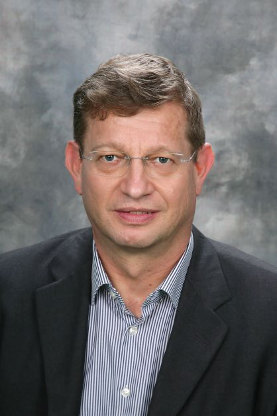
Sebastian Wagner

Description of Activities

A successful standardisation of Ambient IoT will enable SMEs to create devices, applications and services that use Ambient-IoT-enabled chipsets. For instance, novel applications for inventory management are specific battery-less sensors for the use in industrial IoT.

Fellow's country
Open Call
Organisation type
Organization
Standardisation Engineer, EURECOM
Portrait Picture
Wagner
Proposal Title (3rd Open Call)
Ultra-Low Power Ambient IoT Devices in 5G-Advanced
Standards Development Organisation
StandICT.eu Year
2026
Year
Topic (3rd Open Call)

Josef Preishuber-Pflügl

Description of Activities

This work is addressing the demand of harmonised standards for radio regulations certification. In particular it is addressing RFID in the UHF frequency bands 865-868 and 915-921 MHz. 

Fellow's country
Open Call Topics
Impact on SMEs (4th Open Call)
SMEs are major contributors in the RFID industry, contributing to in particular tags, readers and system integration. All of them require harmonised standards. Therefore, the work and content of ISO/IEC 18000-63 is very important to them.
Impact on society (4th Open Call)
This activity is the continuation of the ISO/IEC JTC1 SC31 WG4 "Radio communications" work to serve the international and European industry and society to enhance standards to better serve the needs of Europe and the whole world and in particular to provide standards that are in particular relevant for IoT and DPP.
RFID (UHF RFID, RAIN RFID) are a major used technology for the supply chain and production to reduce overproduction and waste. Furthermore, it is a technology for the Digital Product Passport, which is strongly supported by the European Commission for sustainable product regulations.
Impact on society (8th Open Call)
The resulting harmonised standard will benefit SMEs, other industry players and European societies through the availability of provide and use certified products according the RED. RFID (UHF RFID, RAIN RFID) is a major used technology for the supply chain and production to reduce overproduction and waste. Furthermore, it is a technology for the Digitial Product Passport, which is strongly supported by the European Commission for sustainable product regulations.
Organisation type
Organization
Founder and CEO, innobir e.U.
Portrait Picture
Josef
Proposal Title (3rd Open Call)
Radio regulations for IoT and DPP
Proposal Title (4th Open Call)
IoT identification standardisation
Proposal Title (8th Open Call)
Future of UHF RFID radio regulations - meeting new requirements from the European Commission
Role in SDO
Standards Development Organisation

StandICT.eu Year
2026
Year
Topic (3rd Open Call)
Topic (4th Open Call)

Theofanis Raptis

Description of Activities

The aim of the analysis within ITU is to identify existing gaps and market needs in the area of P2P crowd charging systems. Special focus has been given to smart city vertical areas, as well as technological enablers such as battery ageing mitigation, social information management, standardised prototyping.

Fellow's country
Open Call Topics
Impact on SMEs (7th Open Call)
Use of technologies based on wireless energy sharing are extending to more and more applications yielding a fast-growing market in the consumer electronics sector. Society and industry should overcome obstacles for stakeholders to fully take advantage of this technological opportunity: The current wired (and non-P2P wireless)-based development model that makes charging applications highly centralised and inflexible generates inconvenience to users. The P2P wireless energy sharing vision that universally accessible standards can have the same positive effects on society as wired energy sharing standards and has identified P2P wireless energy sharing interactions as an area where standards can foster the development of innovative approaches, promote use of P2P applications and contribute to the solution of existing social energy sharing challenges.
Impact on society (7th Open Call)
The aim of the analysis within ITU is to identify existing gaps and market needs in the area of P2P crowd charging systems. The special focus has been given to smart city vertical areas, as well as technological enablers such as battery ageing mitigation, social information management, standardized prototyping.
Organisation type
Organization
Senior Researcher at the Institute of Informatics and Telematics, Consiglio Nazionale delle Ricerche
Portrait Picture
raptis
Proposal Title (3rd Open Call)
CrowdWireless++: Further Promoting Crowd Wireless Energy Sharing
Proposal Title (7th Open Call)
CrowdWireless
Role in SDO
Standards Development Organisation

StandICT.eu Year
2026
Year
Topic (3rd Open Call)
Topic (6th Open Call)
Topic (7th Open Call)

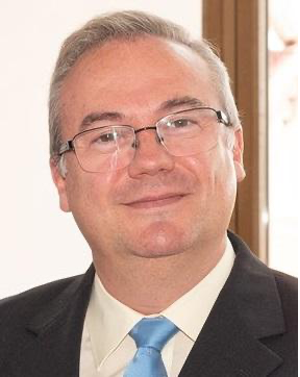
Amelie Gyrard

Description of Activities

The objective of this fellowship is to include European contributions on viable methodologies on semantic interoperability in ISO standards: ISO SC41 IoT and Digital Twin, with a focus on practical use cases in the domains of health/well-being.

Fellow's country
Impact on SMEs (4th Open Call)
Trialog is a SME so we are directly impacted by my contribution. Trialog was the coordinator of the ACCRA H2020 project (robots for ageing), which is now finished. We follow up with standard activities on robotics. In addition, the standards under consideration will benefit all the Smart Robotics and Internet of Robotic Things ecosystem, including SMEs. SME can develop tools and applications compliant with those standards.
Impact on SMEs (5th Open Call)
Trialog is a SME so we are directly impacted by my contribution. Trialog was the coordinator of the ACCRA H2020 project (robots for ageing) which is now finished. We follow up with standard activities on robotics. In addition, the standards under consideration will benefit all the Smart Robotics and Internet of Robotic Things ecosystem, including SMEs. SME can develop tools, applications compliant with those standards.
Impact on SMEs (7th Open Call)
Trialog is a SME so we are directly impacted by my contribution. In addition, the standards under consideration will benefit all the Smart Health and IoT ecosystem, including SMEs. SME can develop tools, applications compliant with those standards.
Impact on society (4th Open Call)
Accelerating the use of digital twins, as the existence of the semantic repository allows the digital twin to manage semantics while the physical twin is managing data. This methodology will ensure a consistent continuum between the physical twin and the digital twin.
Impact on society (6th Open Call)
The following impacts are identified at a general level:
The Internet of Things (IoT) addresses many societal challenges including climate change, resource and energy efficiency and ageing.
In the emerging IoT economy, voluntary global standards can accelerate adoption, drive competition, and enable cost-effective introduction of new technologies.
Standardisation facilitates the interoperability, compatibility, reliability, security and efficiency of operations on a global scale among different technical solutions, stimulating industry innovation and providing greater clarity to technology evolution.
Interoperability between IoT networks operated by different companies along the value chain opens up opportunities to address EU Policy objectives, e.g. greater resource efficiency for a more circular economy, sustainable and responsible supply chains through transparency and traceability, and others
Impact on society (7th Open Call)
The number of connected devices is expected to exceed 20 billion by 2020. This market will be fostered by proper interoperability standards. Europe is strong in IoT innovation and has made significant technical contributions (AIOTI) including in some specific standardization contexts. AIOTI now has a recognized presence at the ISO level, and it is now key to concretize this presence so that European innovation is well represented.
Organisation type
Organization
Principal Research & Innovation Consultant, Trialog
Portrait Picture
Gerard
Proposal Title (3rd Open Call)
IoT Semantic Interoperability for stress management, good health and well-being
Proposal Title (4th Open Call)
IoT Semantic Interoperability for Internet of Robotic Things
Proposal Title (5th Open Call)
IoT Semantic Interoperability for Active Assisted Living with robots for enhanced well-being
Proposal Title (6th Open Call)
Contribution to the standardization of IoT Interoperability by ensuring integration of SAREF
Proposal Title (7th Open Call)
IoT Semantic Interoperability for health informatics and well-being
Standards Development Organisation
StandICT.eu Year
2026
2029
Year
Topic (3rd Open Call)
Topic (4th Open Call)
Topic (5th Open Call)
Topic (6th Open Call)
Topic (7th Open Call)