ISO

Available (496)

Showing 493 - 496 per page


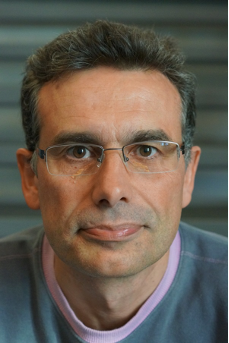
Richard Pitwon

Description of Activities

This fellowship helped to establish dominant European influence on the first standards for QPICs.

Country
Ireland
Fellow's country
Open Call Topics
Impact on SMEs (4th Open Call)
The formation of a new IEC working group on fibre optic quantum interconnect will align with the technologies of many European SMEs who would benefit from early engagement to develop standards, which help accelerate commercial adoption of their approaches. Therefore, I am strongly engaging with European quantum SMEs to secure support for the proposal and encourage participation. The successful formation of the WG would be followed by the establishment of liaisons to ISO/IEC JTC3 and CEN/CENELEC TC86
Impact on SMEs (6th Open Call)
The formation of IEC TC86 WG11 aligns well with the technologies of many European SMEs who would benefit from early engagement to develop standards, which help accelerate commercial adoption of their approaches. I am strongly engaging with European quantum SMEs to encourage participation from Europe; at the moment, the membership of the group overwhelmingly European (85%).
Impact on SMEs (9th Open Call)
I have built up the membership of this group, which at the time of the final report now has 39 members including 17 members from Europe, which includes some SMEs. The membership is therefore overwhelmingly European (45%).In particular through my fellowship I have consulted with many European quantum and photonic SMEs including Wave Photonics, Bay Photonics and Lumino to actively promote participation through BSI, which is a relatively easy process compared to other European NCs.
Impact on society (4th Open Call)
Europe is already a world-leader in the scientific research and industrialisation of quantum technologies, especially with regards to quantum communication and quantum computation technologies. My fellowship will strengthen European influence on quantum standards and by assuming a strong position on quantum technologies from industrial, academic and standardisation angles, Europe will be in a stronger position to establish a global competitive edge in this field.
Impact on society (6th Open Call)
This activity will strengthen European influence on quantum standards and by assuming a strong position on quantum technologies from industrial, academic and standardisation angles, Europe will be in a stronger position to establish a global competitive edge in this field.
Impact on society (9th Open Call)
European participation and influence in quantum standards groups will be critical to provide a boost across the European supply-chain enabling a larger European quantum market.
The potential benefits to society of quantum networks and quantum computers will be huge. Quantum safe networks will be required to send confidential data securely over appreciable distances and quantum computers will allow impossible world-scale simulations to be carried out in reasonable times.
Europe is already a world-leader in the scientific research and industrialisation of quantum technologies, especially with regards to quantum communication and quantum computation technologies. The key outcome of this fellowship was the successful establishment of IEC TC86 WG11 on Quantum Optical Interconnect as an active and growing Working Group. This new WG11 is strategically critical as its standards will strongly underpin quantum communication and networks, as well as contributing to all other quantum pillars.
By ensuring European SMEs participate actively in this new WG to apply Europe aligned positions on quantum technologies from ethical, industrial and academic angles, European influence on quantum standards will be strengthened and European society will be in a stronger position to establish a global competitive edge in this field.
These areas align well with strengths and expertise in European academic institutions and smaller start-up companies. Thus I have during this fellowship leveraged my extended network to increase involvement of the nascent European quantum industry, drawing primarily on UK. Swiss and EU entities for future support of and contributions to the new working group, thereby establishing strong European influence from the outset. I have successfully grown the membership to 39 members and I expect this to continue to grow rapidly now that we have started developing strategically critical new standards, in particular for quantum grade connectors.
Organisation type
Organization
Consultant - Resolute Photonics UK Ltd
Portrait Picture
pitwon
Proposal Title (1st Open Call)
Standards for Quantum Interconnect and Quantum Photonic Integrated Circuits
Proposal Title (4th Open Call)
Standardisation Working Group for Quantum Interconnect
Proposal Title (6th Open Call)
creation of the new IEC TC86 WG11 - Quantum Optical Interconnect
Proposal Title (9th Open Call)
Building New Standardisation Working Group for Quantum Interconnect
Role in SDO
Standards Development Organisation
Topic
Quantum Technology
StandICT.eu Year
2026
Year
Topic (1st Open Call)
Topic (4th Open Call)
Topic (6th Open Call)
Topic (9th Open Call)

Jan Lindquist

Description of Activities

SME’s will be encouraged to build services on the wallet when there are key benefits for wallet holder focusing on privacy and security when sharing personal data.

Country
Sweden
Fellow's country
Impact on SMEs (6th Open Call)
My work has a direct impact on European SMEs and society. By contributing to standards like ISO/IEC 27560 and the EUDI Wallet Access Control in CEN TC224/WG20, I help create practical, privacy-focused frameworks that SMEs can adopt with minimal cost and complexity. These standards enable GDPR-compliant consent, transparency, and data minimization, reducing legal risk and building user trust.
Impact on SMEs (9th Open Call)
My work simplifies GDPR compliance for European SMEs by developing standards that make privacy receipts and access control both practical and cost-effective. By embedding lawful bases and user-facing transparency into consent and data access records, SMEs can demonstrate accountability while reducing legal risk. For society, this promotes stronger digital rights, user agency, and trust in the EUDI Wallet ecosystem.
Impact on society (6th Open Call)
In terms of broader European interests, my fellowship contributes to EU goals of digital sovereignty, user empowerment, and privacy leadership on the global stage. As the EUDI wallet is adopted across Europe, this framework will provide a scalable model for data protection and user-centric identity management that can be extended beyond digital wallets to other data-sharing contexts, enhancing Europe’s role as a privacy leader. With data privacy becoming a key competitive factor, this initiative not only strengthens the protection of EU citizens’ rights but also sets a high standard for digital identity solutions globally.
Impact on society (9th Open Call)
My work supports fundamental societal values by helping define how citizens can safely and transparently share their personal data through the European Digital Identity (EUDI) Wallet. At the heart of this is the development of access control standards that ensure individuals are not just passive data subjects, but active participants who can decide what data is shared, with whom, under what conditions, and for what declared purpose.
By enabling these controls through enforceable, machine-readable policies, the standard empowers users to exercise real agency over their digital identity—moving beyond consent screens toward meaningful privacy protections embedded in the architecture of the wallet itself. This aligns with the EU’s commitment to privacy, data minimisation, and purpose limitation under the GDPR.
The work also supports societal inclusion by ensuring that access control mechanisms are transparent and usable, helping citizens understand their rights and obligations, while also simplifying compliance for service providers. The inclusion of ISO/IEC 27560 in this framework ensures that all lawful bases for processing—not just consent—are clearly documented and traceable, which is especially important for use cases like healthcare, education, or public services.
Importantly, the open availability of ISO/IEC 27560 as a free standard lowers the barrier for adoption, supporting uptake by public administrations, SMEs, and civil society. This ensures that privacy-enhancing technologies are not limited to large commercial actors, but can benefit all layers of European society.
Overall, this work contributes to a more trustworthy, transparent, and citizen-centric digital identity ecosystem—one that upholds European values while supporting innovation, cross-border interoperability, and regulatory alignment.
Organisation type
Organization
Linaltec AB
Portrait Picture
Lindquist
Proposal Title (1st Open Call)
Consent records and privacy principles in eIDAS2 wallet
Proposal Title (3rd Open Call)
EUDI Wallet (eIDAS2) held personal data access control
Proposal Title (6th Open Call)
This fellowship directly contributes to strengthening the ICT Standards landscape in two key areas: digital identity access control and lawful data processing under GDPR
Proposal Title (9th Open Call)
EUDI Wallet (eIDAS2) held personal data access control
Standards Development Organisation
Topic
E-privacy
Year
Topic (1st Open Call)
Topic (6th Open Call)

Robert Mueller

Description of Activities

The main challenge is that some industry players dominate national bodies and want to promote their own product by making contributions to the industry standard.

Country
Germany
Fellow's country
Impact on SMEs (2nd Open Call)
Standardised biometric data formats enable interoperability and exchanging system components like biometric capture devices, algorithms, storage systems. This is of relevance for SMEs who typically provide only a single component rather than an entire solution like industry leading large corporations – which sometimes may rely on proprietary data formats.
Impact on SMEs (4th Open Call)
SMEs who typically provide only a single component rather than an entire solution like industry leading large corporations – which sometimes may rely on proprietary data formats.
Impact on SMEs (5th Open Call)
The interoperability achieved with this standard helps particularly SMEs who typically provide only a single component to a BSoC while larger corporations could provide an entire solution which may be proprietary.
Impact on SMEs (7th Open Call)
The standard promotes Biometric System-on-Card architecture, characteristics and interfaces. It is a technology that improves security and privacy for citizens in Europe and beyond, because personal data remains on a personal card. The interoperability achieved with this standard helps particularly SMEs who typically provide only a single component to a BSoC while larger corporations could provide an entire solution which may be proprietary.
Impact on society (2nd Open Call)
Biometric user authentication is present in many applications, including not only smartphone usage but also banking, national ID, healthcare and border management. Citizens in Europe and beyond benefit from the use of open standards in civil and governmental applications allowing transparency, privacy and guaranteed level of service.
Impact on society (4th Open Call)
Standardised biometric data formats enable interoperability and exchanging system components like biometric capture devices, algorithms, storage systems
Impact on society (5th Open Call)
The standard promotes Biometric System-on-Card architecture, characteristics and interfaces. It is a technology that improves security and privacy for citizens in Europe and beyond, because personal data remains on a personal card.
Impact on society (7th Open Call)
Technology for Biometric System-on-Card (BSoC) has advanced significantly since the first publication of the ISO/IEC 17839 series from 2014-2016. This made an amendment of part 2 necessary in 2021 and a revision started 2022/2023. The major gaps are that the currently published standards partially refer to outdated technology and do not cover many recent industry developments in the field of BSoC. This includes enrolment methodologies, sensor and card manufacturing, but also processes and usage of biometric cards. The priority is to consider all inputs from national bodies, come to a consensus and progress the standard series according to the ISO business plan. Challenges are divers inputs from industry delegates targeting different solutions. It is important to include all contributions from national bodies while keeping the timeline mandated by the ISO business plan.
Organisation type
Organization
Dr. Robert Mueller IT Consulting
Portrait Picture
mueller
Proposal Title (1st Open Call)
Advance Biometric System-on-Card standard series ISO/IEC 17839
Proposal Title (2nd Open Call)
Progress Extensible Minuitiae Standard ISO/IEC 39794-2
Proposal Title (3rd Open Call)
Advance Biometric System-on-Card standard series ISO/IEC 17839
Proposal Title (4th Open Call)
Develop Amendment to extensible minutiae standard ISO/IEC 39794-2
Proposal Title (5th Open Call)
Advance Biometric System-onCard standard series
Proposal Title (7th Open Call)
Advance ISO/IEC 17839 Biometric System-on-Card standard series
Standards Development Organisation
Topic
Cybersecurity
StandICT.eu Year
2026
Year

The aims and principles of standardization

In this early publication by ISO, the objectives of standardization are explained as well as the organizational structures of standardization at the international, national and company level. Examples are given for various technical fields to demonstrate the effect standards and harmonized measurement units can have in terms of variety reduction, simplification and economic benefits for producers as well as for consumers. Standards are described as a tool for management, in particular in the fields of design, production, purchasing, marketing and export, administration and the control of quality.

Topic:
Education
Standards Process
Language:
English
Format:
Other PDF
Level of expertise:
Entry level
Intermediate
Advanced
Created on:
04/23/2026
Source:
Attachments: