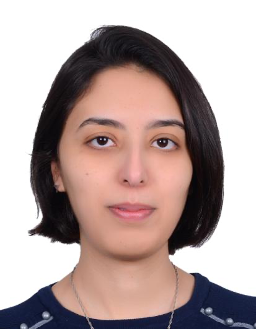
Peter Baumann
Description of Activities
My fellowship tackles the gap related to the insufficient models for achieving analysis-ready geo data.
Fellow's country
Open Call Topics
Impact on SMEs (2nd Open Call)
SMEs benefit from these standards as they give guidance for implementation and allow products to be interoperable with the tools available in the market.
Impact on SMEs (7th Open Call)
Never before has there been a faster and cheaper way to obtain information about land, water, atmosphere, as well as human impact on it. In Europe, for example, the Copernicus satellite family provides the foundation for insight into our planet, together with long climate time series and further data, such as elevation models. For such Big Earth Data, spatio-temporal datacubes are an established cornerstone in OGC, ISO, and INSPIRE standardisation modelled as "coverages".
For robust, user-friendly, interoperable services, a technically sound coverage standards suite is indispensable. The ISO/OGC suite of coverage data and service model is instrumental for easy, interoperable handling, and a who’s who of primary open-source and proprietary geo tools support these standards. For example, the legal framework for a common European spatial data infrastructure, INSPIRE, has adopted CIS as its basis.
In summary, this work is of the highest practical relevance and visibility, with significant impact on geo data infrastructures and, ultimately, increased understanding of our planet and the impact we have on it, as well as everyday day-to-day use of insight from geo data.
For robust, user-friendly, interoperable services, a technically sound coverage standards suite is indispensable. The ISO/OGC suite of coverage data and service model is instrumental for easy, interoperable handling, and a who’s who of primary open-source and proprietary geo tools support these standards. For example, the legal framework for a common European spatial data infrastructure, INSPIRE, has adopted CIS as its basis.
In summary, this work is of the highest practical relevance and visibility, with significant impact on geo data infrastructures and, ultimately, increased understanding of our planet and the impact we have on it, as well as everyday day-to-day use of insight from geo data.
Impact on SMEs (9th Open Call)
SMEs typically provide niche products which are accepted by the market only if they convey strong interoperability. The 19123-2 standard accomplishes this for images, image timeseries, and further Earth data. Spatio-temporal Earth data, as standardized with 19123-2, are instrumental for manifold purposes, such as environmental monitoring, disaster management, and many more.
Impact on society (2nd Open Call)
This standards work is of highest practical relevance and visibility, with significant impact on the interoperability of geo data infrastructures and, ultimately, increased understanding of our planet and the impact we have on it.
Impact on society (7th Open Call)
Better standards allow better tools and services, allowing us to gain a better understanding and insight into our planet. In particular, analysis of time series and fusion of multiple data sources, from in-situ to orbit, are critical enablers. The 19123-2 specification defines flexible, scalable, and interoperable ways of combining various spatio-temporal data sources into a standard picture; suitable tools may even provide dynamic services answering “any query, anytime”.
Linkedin Profile
Organisation type
Organization
ISO standard editor, rasdaman GmbH
Organization website
Portrait Picture
Proposal Title (2nd Open Call)
Enhanced Interoperability of Spatio-Temporal Datacubes
Proposal Title (7th Open Call)
Enhanced Interoperability of Big Geo Data
Proposal Title (9th Open Call)
Final Adoption of Big Earth Datacube standard
Read more
Standards Development Organisation
StandICT.eu Year
2026
Year
Topic (2nd Open Call)
Topic (7th Open Call)
Topic (9th Open Call)