Read time: 5 mins
What does it look like to enter the world of European standardisation as an AI practitioner for the first time?
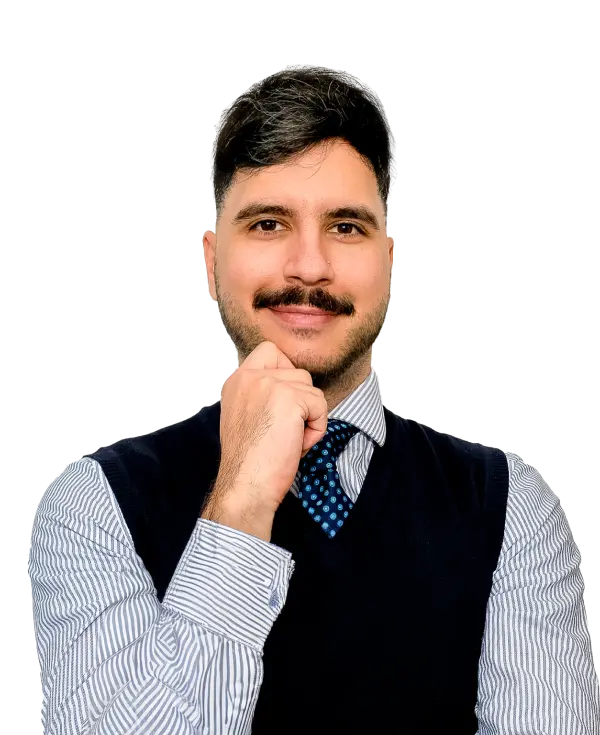
Through her StandICT.eu Fellowship, Eva Marečková joined the work of CEN-CENELEC JTC 21 WG4, bringing her practical experience of AI implementation for SMEs into the development of European standards.
In the following account, Eva shares in her own words the activities carried out during her Fellowship, the contributions she made to the standardisation process, and what she learned along the way.
She also reflects on the impact domain experts can generate across the European SME ecosystem by taking advantage of the opportunities offered through the StandICT.eu Open Calls.
Eva Marečková is an AI implementation consultant and educator working with SMEs, and a StandICT.eu 2029 Open Call 2 fellow contributing to CEN-CENELEC JTC 21 WG4.
Her fellowship brings the practical perspective of European SMEs into the development of CEN-CENELEC AI standards. It focuses on AI trustworthiness, transparency and human oversight in line with the EU AI Act, while also contributing to standards on AI literacy, upskilling and professional competencies.
Ten days after I received access to the working documents of CEN-CENELEC JTC 21 WG4, a definition I proposed was recorded in the official minutes of the group as part of resolving open conditions on a draft European standard.
Seven weeks after that, seven formal comments I wrote on the same draft were on the official record of its European Enquiry, submitted through my national standards body in one joint Czech table with a fellow expert.
Six months ago, I had never seen the inside of a standards committee.
I am not a career standards professional. I run an AI implementation practice for small and mid-sized businesses: audits, pilots, production systems, training people to work with AI safely.
Like most practitioners, I knew European AI standards were being written somewhere, by someone, and assumed that “someone” could not possibly be me. The room seemed reserved for large enterprises, academics, and people who had spent decades in standardisation.
The StandICT.eu fellowship changed that assumption in a very practical way.
The application asked a simple question underneath all the formal fields: what can you contribute, and what will you commit to? I answered as what I am, an implementer.
Someone who sees daily what happens when an SME tries to adopt AI responsibly: which oversight mechanisms are realistic in a ten-person company, which transparency requirements a non-technical owner can actually operate, where well-intended requirements quietly assume an enterprise-sized compliance department.
Here is what surprised me once I was inside.
The work is more concrete than its reputation. A standards meeting is not an abstract debate. It is a group of people working through a document line by line, asking whether a definition holds, whether a requirement is testable, whether a term means the same thing in every member state.
When I proposed a definition in one of my first meetings, it was not treated as a newcomer’s interruption. It was examined on its merits, discussed, and adopted into the group’s resolution. The minutes do not record how long you have been at the table. They record what you contributed.
A formal comment is not a mysterious artifact. It is a precise observation plus a proposed fix, written in a template. If you have ever reviewed a contract, a specification, or a colleague’s important document, you already have the core skill.
What practitioners add is the part that cannot be learned from inside the room: knowing how the words will land when a real company, with real constraints, tries to comply with them. Each of my comments started from a documented deployment case, anonymised, and ended with proposed replacement text. That is the whole method.
The structure supports newcomers more than it filters them. The StandICT.eu fellowship came with a mentorship programme, and having an experienced peer to ask “is this how it is done?” removed most of the anxiety of the first weeks.
Coordinating my comment set with another expert from my country showed me the national-committee layer working as intended: independent perspectives, merged into one stronger national contribution, accepted by our standards body without a single change.
Why does this matter beyond my own learning curve?
Because the standards being written now will define what responsible AI adoption means in practice, including for the millions of European SMEs that will never attend a single meeting.
When the Enquiry on the logging part closed in August, the comments came overwhelmingly from a handful of large member states. If the only voices at the table come from organisations with dedicated compliance teams, the requirements will quietly assume everyone has one.
Practitioner voices, SME voices, and, yes, more women’s voices are not a diversity ornament in this process: they are missing data.
If you have implementation experience and have assumed standardisation is not for you, my experience says otherwise.
Follow the work of CEN-CENELEC JTC 21. Contact your national standardisation body about its mirror committee. Follow StandICT.eu to stay updated on their open calls: the fellowship provides the funding, the structure, and the mentorship that turn “someone should say this” into a documented contribution.
The companies these standards are written for will never sit in that room. Every clause we get right now is a compliance cost a small company will not have to carry later. That is exactly why someone who works with them should help write them.